〈Body-Check #04〉 · a Dr. Water check-up
Hi. I’m Dr. Water 🐬. I’m a doctor — the kind who keeps working adults healthy (occupational and preventive medicine).
Ninja missions run through the night, pretty much always. Days hidden in enemy territory, standing watch, fighting without rest. Read the series and those people look like they own a “sleepless body.” And fans ask me all the time: “If I trained, could I get by without sleep like that too?”
I get it. If you could stay up and stay sharp, you’d get twice the life. But — let me say this as an occupational doctor — that is the single most worrying question you can ask me.
So today, not as a review of the series but as a story about your body, I’ll check the math against real sleep medicine. The short version up front: “a person who’s fine without sleep” is almost entirely a myth — and the body that keeps performing the myth quietly gets sent a bill.
📺 Want to read it the legit way? Naruto is available on Shueisha’s official Manga Plus.
The house rules
I’m not here to judge the series. I’m here to ask, “if a human body did this, what would really happen?” — and back every medical claim with a paper.
Q1 | Can you keep your judgment sharp running missions all night? — that all-nighter is tipsy driving.
A ninja’s job punishes a single lapse of judgment. So this is the first thing I look at. In the series they run missions for days without sleep; do that in a real body, and judgment is the very first thing to go.
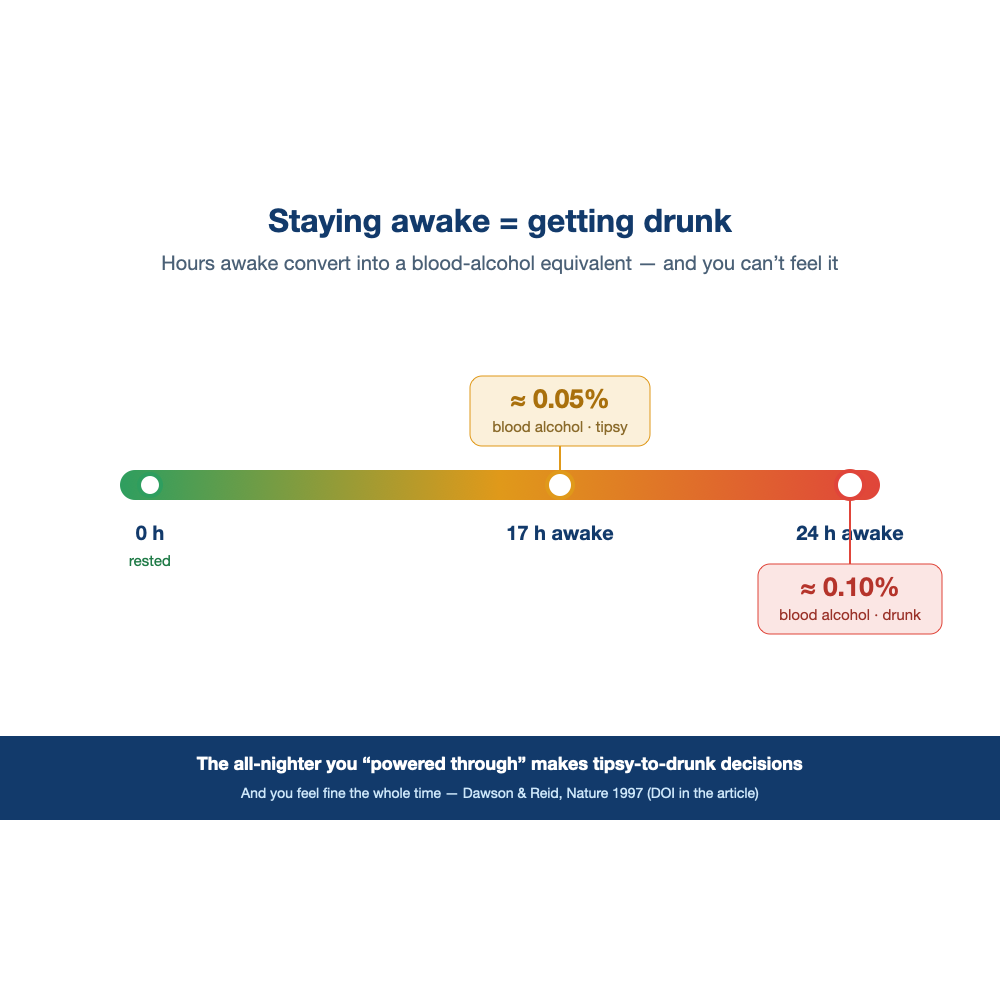
And here’s the nasty part: you can’t tell it’s going. After roughly 17 hours awake, your cognitive and motor performance drops to about the level of a 0.05% blood alcohol concentration; go a full 24 hours and it’s near 0.10% — from tipsy into clearly drunk (Dawson & Reid, Nature 1997).
So handing a ninja fresh off an all-nighter a fistful of shuriken is, physiologically, close to handing a blade to someone who’s been drinking. And they think they’re still fine. That’s the scariest part.
The thing that breaks first and worst under sleep loss is vigilance — the ability to stay alert and ready instead of zoning out (Lim & Dinges, Psychological Bulletin 2010). For a ninja on watch, that’s fatal. A sleepless body lets go of the one ability it needs most, first.
The series shows this directly. Sakura stays awake for days guarding her two unconscious teammates — “I have to be the one to protect them both…” The resolve is genuine. But read the scene as an occupational physician and something else appears: the harder you are trying to protect someone, the less able you are to see your own decline. By that point, her judgment is already in tipsy-driving territory.
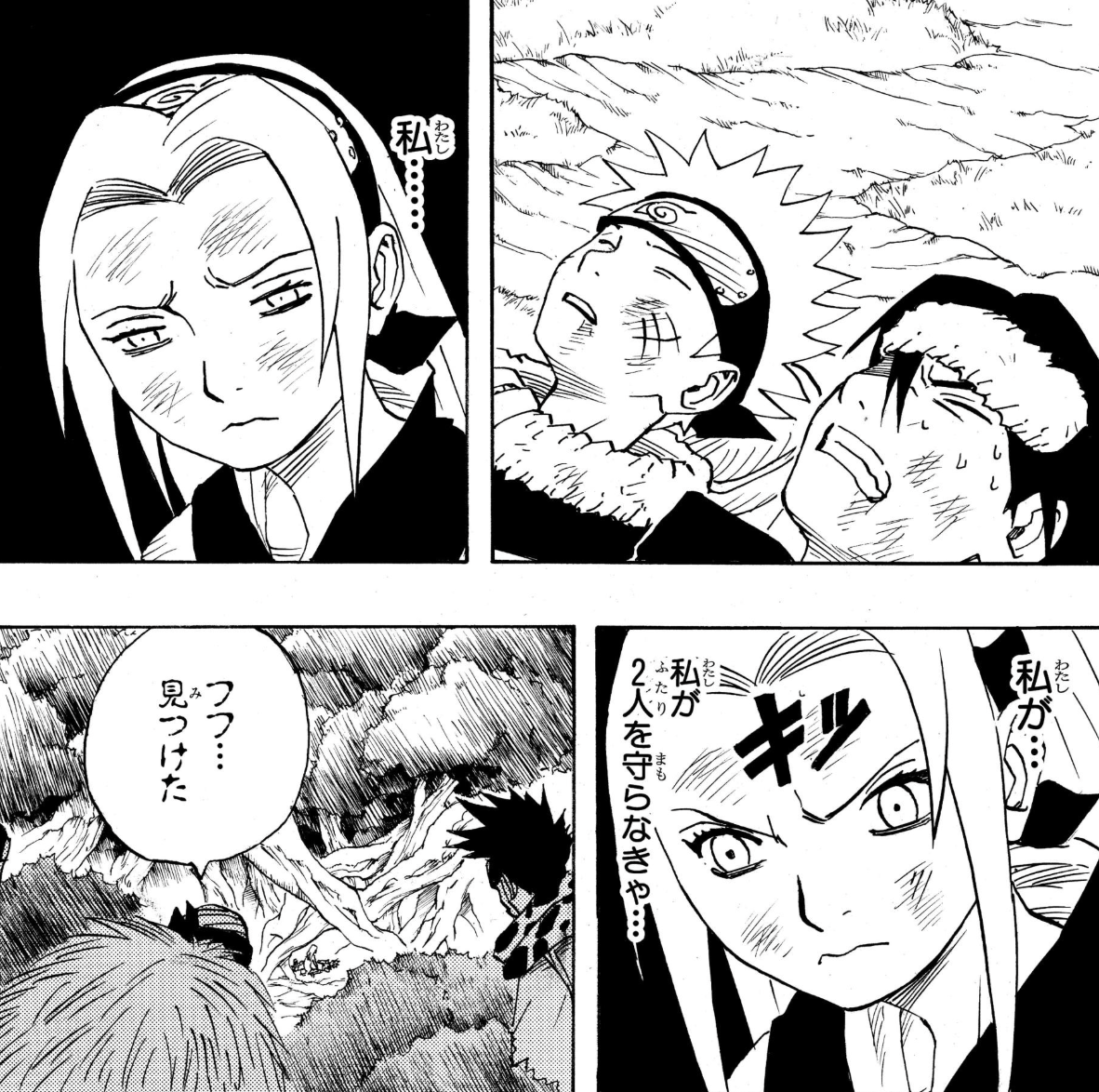
Source: Masashi Kishimoto, NARUTO (Shueisha) — quoted for commentary
Takeaway: The judgment of an all-nighter you “powered through on guts” is tipsy judgment. Make the big decisions after you’ve slept.
 Dr. Water
Your 2 a.m. “one more episode” brain? Medically speaking, that’s a tipsy brain. I’m not judging — I’m diagnosing. 🍷
▶ Related check-up: Demon Slayer Vol.1, body-checked — another set of superhuman feats run past the same doctor’s eye, where willpower keeps trying to overrule biology.
If you want the answer in Naruto’s own words: “The answer to that is NO.” Medically, it is exactly the same NO.
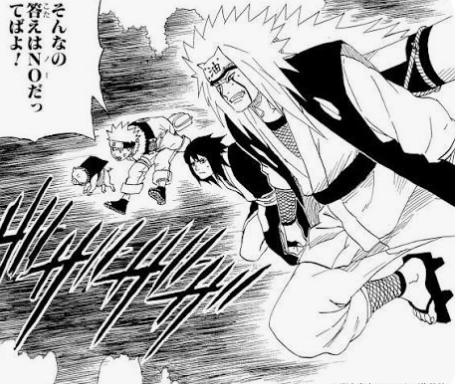
Source: Masashi Kishimoto, NARUTO (Shueisha) — quoted for commentary
Q2 | What if you only shave off a little each night? — that debt is quietly stacking up.
“Okay, a full all-nighter is bad — but trimming a little every day, that’s fine, right?” A ninja’s daily life is really this: cut sleep to 4–6 hours for each mission, and keep doing it.
Here’s the meanest property of sleep. What you shave off doesn’t vanish — it stacks up as debt.
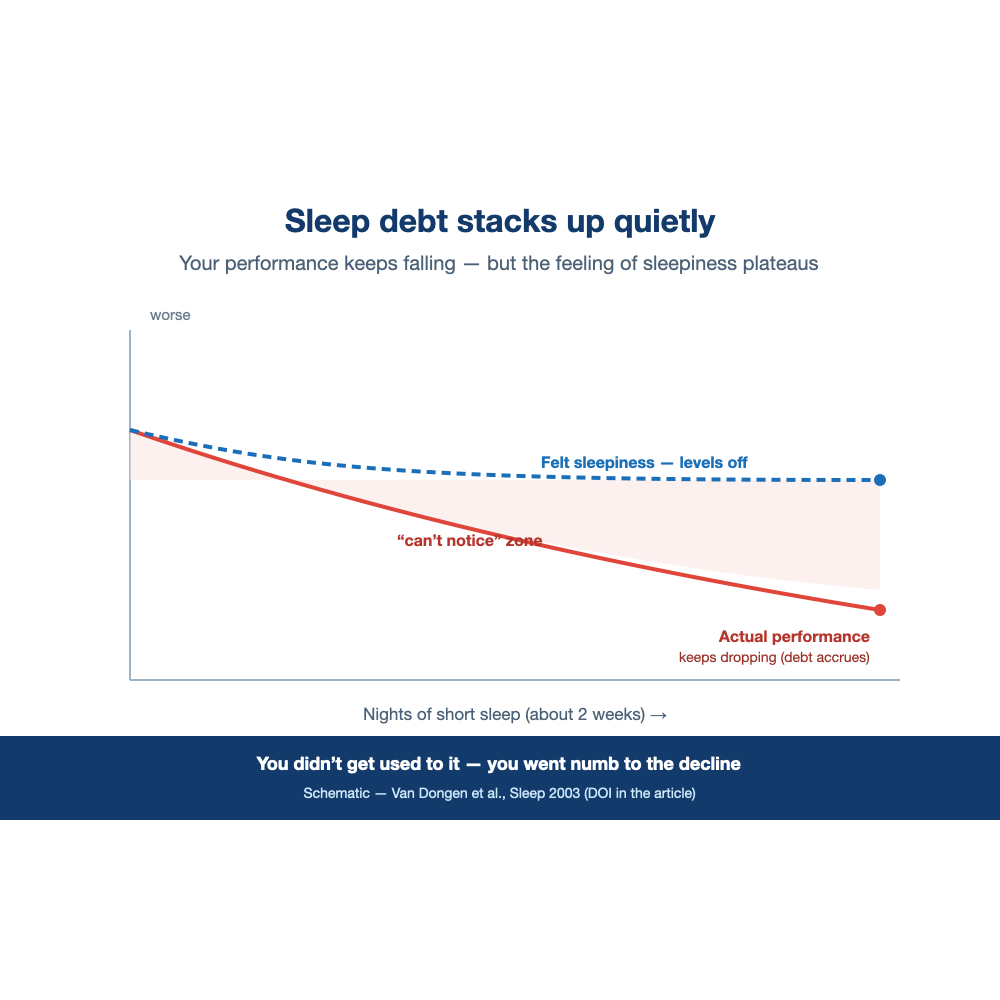
Restrict sleep to 4–6 hours a night, night after night, and the drops in attention and reaction time accumulate day by day, reaching — in about two weeks — impairment comparable to up to two nights of total sleep deprivation (Van Dongen et al., Sleep 2003).
And the eeriest finding: participants’ self-reported sleepiness leveled off partway through, while their objective performance kept falling (Van Dongen et al., Sleep 2003). Your body keeps getting worse while you feel “I’m used to it now, this is fine.” You didn’t get used to it — you just went numb to the decline. The ninja who’s “adapted” to no sleep is probably right here: not stronger, just no longer able to notice their own degradation.
Takeaway: “I’ve gotten used to short sleep” is usually “I’ve stopped noticing the debt.” That used-to-it feeling is not to be trusted.
Dr. Water“I got used to 5 hours” is my least favorite sentence in the clinic. Your test scores didn’t get used to it — I promise. 📉
Kakashi drops to one knee the moment he uses his strongest technique — “Damn it!! Use the Mangekyo and this happens right away!!” Borrow power, and the bill arrives immediately. Sleep debt is the same mechanism with one cruel difference: the invoice does not arrive right away. It arrives quietly, later. That delay is why nobody notices.
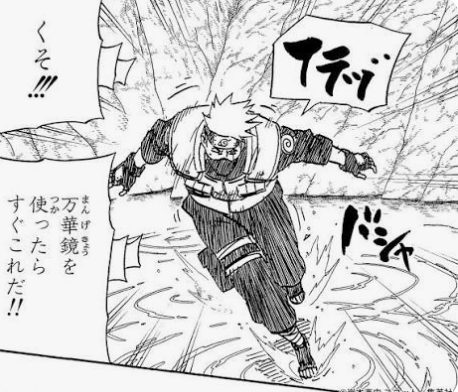
Source: Masashi Kishimoto, NARUTO (Shueisha) — quoted for commentary
Q3 | So is a “fine without sleep” constitution actually real? — yes. But it’s lottery-rare.
Now for a bit of hope. “Some people really are fine on little sleep” — true. It’s just that the odds you are one of them are, unfortunately, quite low.
A rare few carrying a mutation in a gene called DEC2 are “natural short sleepers” who function well on an average of about six hours without much trouble (He et al., Science 2009). It wouldn’t be strange for a ninja village to have one or two people built like that. As premises go, it’s a good shot.
But — this is a rare genetic exception. Most people who thought “maybe that’s me” are simply carrying sleep debt they haven’t noticed, which is how the field reads it (He et al., Science 2009). People who look fine on short sleep and people who genuinely are fine on short sleep are completely different animals — the first is in debt, the second won a lottery.
Takeaway: “I can run on short sleep” is a life plan that assumes you already won the lottery. For most people, it doesn’t apply.
The series has exactly one genuinely sleepless ninja
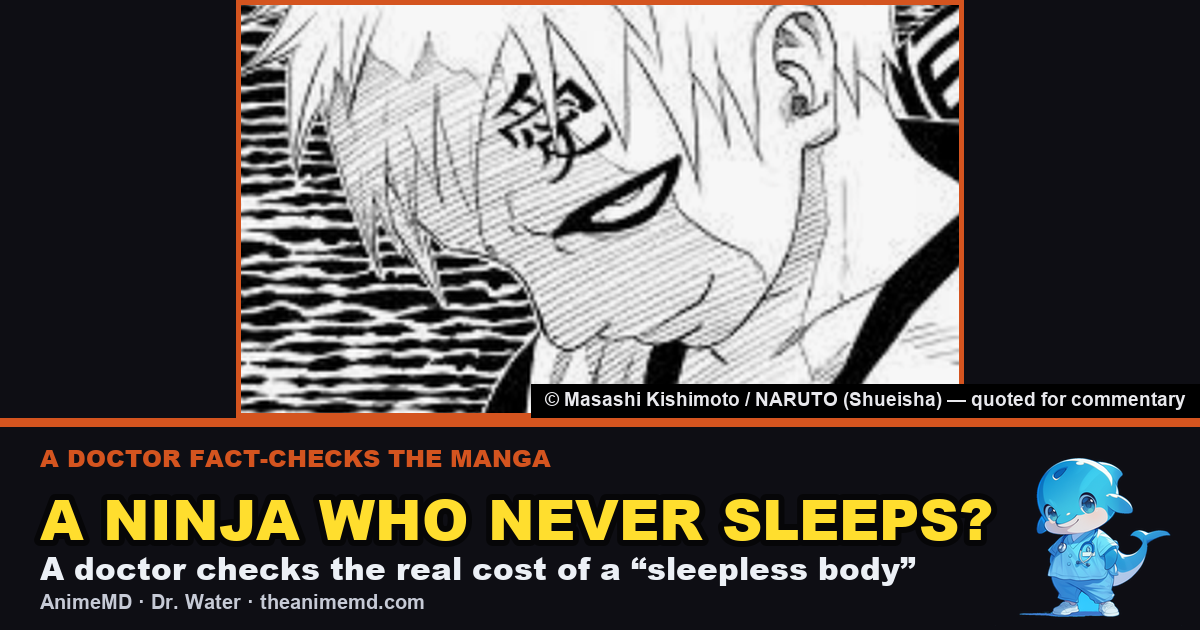
Let me bring in Gaara of the Sand. If he falls asleep, the tailed beast sealed inside him takes over his body — so he grew up barely sleeping at all. Those heavy dark rings under his eyes are drawn as the mark of chronic sleeplessness.

Source: Masashi Kishimoto, NARUTO (Shueisha) — quoted for commentary
And here is the part that matters: the series never draws him as a superhuman who is fine without sleep. Deprived of sleep, he becomes emotionally unstable and, for years, unreachable. The story itself is saying that a sleepless body comes at a price.
To a physician that reads as an honest portrayal. The DEC2 carriers from Q3 are not people who don’t need sleep — they are people for whom a short night is already enough. Gaara, robbed of sleep entirely, is a completely different thing.
Q4 | ⚠️ Keep living without sleep, and what’s left in the body? Straight-faced here.
Sleepiness and judgment were still the “while you’re awake” part. The real problem is the long-term damage that shaved-down sleep carves into the body itself. I’ll say this one plainly.
When your body clock falls out of sync with your sleep and meals (night shifts, all-nighter living), even a short spell measurably worsens blood sugar, insulin, and blood pressure (Scheer et al., PNAS 2009). “I’m young” and “I train” don’t paper over a physiological change like that.
And keep it up, and the numbers follow. Chronic short sleep (roughly under 5–6 hours) is associated with a higher risk of developing type 2 diabetes in an analysis pooling many prospective studies (Cappuccio et al., Diabetes Care 2010).
The cost of a sleepless body doesn’t end at “sleepy.” It stays in you as a bill that comes due later — cognitive decline, reduced safety, and the obesity/diabetes/cardiovascular risks that creep up from behind (Van Dongen 2003 / Scheer 2009 / Cappuccio 2010).
So — please don’t envy the “sleepless body” and shave your own sleep for it. Ninja are fiction; your pancreas and your blood vessels are real. This part, as an occupational doctor, I’m genuinely asking.
— I’ll confess: back in my residency, coming off an overnight on-call, I drove home thinking “huh, I’m actually fine,” and nearly ran a red light. That “I’m fine” was exactly the tipsy confidence from Q1. If I could, I’d reach into the passenger seat and chew that guy out. So — don’t copy it.
Dr. WaterYes, the reckless resident in that story was me. Doctors make terrible patients — please be smarter than young Dr. Water. 💦
Takeaway: Bragging about not sleeping is bragging about a loan taken out against your future self. You rarely get to pick the repayment date.
The verdict: fantasy vs. real
| Belief | Verdict |
|---|---|
| You can keep judgment sharp running missions all night | ✕ fantasy (17–24h awake ≈ “drunk,” and you can’t tell) |
| Shave a little sleep daily and you’ll adapt and be fine | ✕ fantasy (debt accumulates; “adapting” is just going numb) |
| Some people are genuinely fine without much sleep | ○ partly true (DEC2 short sleepers are real, but a rare exception) |
| Living without sleep does the body no harm | ✕ fantasy (worse blood sugar/pressure; higher type-2-diabetes risk) |
Wrap-up
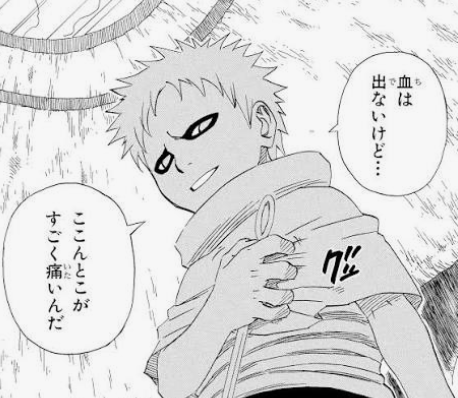
Source: Masashi Kishimoto, NARUTO (Shueisha) — quoted for commentary
As a child, Gaara described his own pain like this: “It doesn’t bleed… but it hurts, right here.” That is the danger of sleep debt in one line. It doesn’t bleed. No test flags it. It still hurts — and by the time you feel it, it has been stacking for a long time.
The series also draws Naruto asleep. On the cover of volume 42 he is out cold beside Jiraiya, completely unguarded. Being able to sleep between missions isn’t weakness — it is having a body ready for tomorrow.
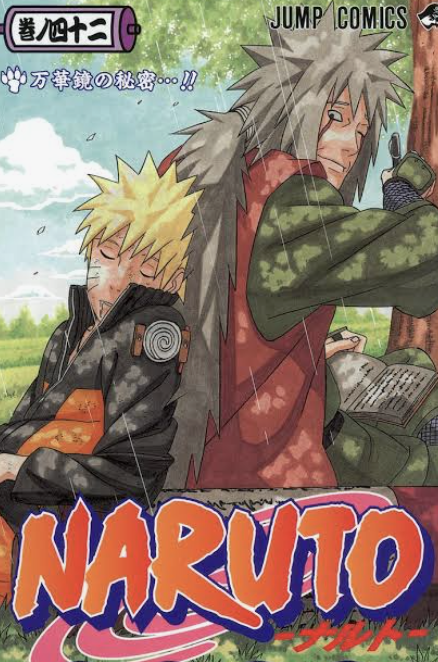
Source: Masashi Kishimoto, NARUTO (Shueisha) — quoted for commentary
You can’t obtain a ninja’s “sleepless body” in real life. Some people truly are fine on short sleep — but that’s not the fruit of training, it’s a rare inborn draw.
And for the rest of us, shaved sleep doesn’t disappear. It piles up quietly, and gets collected later — with interest — from your judgment, your pancreas, and your blood vessels. “I slept properly” beats “I never sleep,” and over the long run it’s far more like the self-discipline of an actual ninja.
Manga is a doorway into how strange the human body is. And the real body is more honest than you’d think.
See you at the next check-up.
📚 Following the series? This was 〈Body-Check #04〉. More anime, fact-checked by a doctor, is on the way. Get each new check-up in your inbox — subscribe free.
Frequently Asked Questions
Could a person really train their body to function fine without sleep, like a ninja on an all-night mission?
No — a “sleepless body” that performs fine without rest is almost entirely a myth. After about 17 hours awake, cognitive and motor performance drops to roughly the level of a 0.05% blood alcohol concentration, and after a full 24 hours it’s near 0.10%, solidly drunk-equivalent. The most dangerous part is that people can’t tell their own judgment is impaired.
If I get used to sleeping only 4-6 hours a night, does my body actually adapt to it?
No — what feels like adapting is usually just losing the ability to notice your own decline. In a study restricting sleep to 4-6 hours nightly for about two weeks, attention and reaction time kept getting worse, reaching impairment comparable to up to two full nights of no sleep — even as people’s self-reported sleepiness leveled off partway through.
Is running on very little sleep ever genuinely fine for some people, and what’s the real cost of chronic short sleep?
For nearly everyone, no — genuine “short sleepers” exist only as a rare genetic exception, and most people who think they’re one of them are simply carrying unnoticed sleep debt. Chronically shaving sleep down has real long-term costs: even short-term misalignment of sleep and body clock measurably worsens blood sugar, insulin, and blood pressure, and chronic short sleep is linked to higher risk of type 2 diabetes. Prioritizing real sleep beats pushing through, especially before decisions that matter.
Disclaimer 1 | Medical
This article is general, educational medical commentary sparked by a work of entertainment. It is not medical advice and not intended to diagnose or treat. Reading it creates no doctor–patient relationship. For any health decision, consult your own physician. The author is a doctor, but these views are general and personal, and the author is not your doctor. Do not imitate a sleep-depriving lifestyle like the one depicted; the author is not responsible if you harm your health. In particular, never drive or perform dangerous work while sleep-deprived. If you have chronic insomnia or strong daytime sleepiness, do not self-diagnose — please consult a medical provider.
Disclaimer 2 | Copyright & Non-Affiliation
This site is an independent, unofficial fan commentary/criticism work. It is not affiliated with, endorsed by, or sponsored by any anime/manga studio, publisher, author, or rights holder. All titles, characters, logos, and trademarks belong to their respective owners and are referenced here solely for identification, commentary, and criticism. This article reproduces a limited number of manga panels from NARUTO (Masashi Kishimoto / Shueisha) as quotation for the purpose of criticism and commentary. Each panel is reproduced unaltered, attributed to its source, and used only to the extent necessary to support the surrounding analysis, which is the substance of this piece. Translations are provided in the captions; the original artwork and lettering are never modified. No unauthorized scans or fan translations are used. Rights holders with concerns: please contact us and we will respond promptly.
🩺 Your check-up is over — but the clinic is always open
📚 This clinic has a sequel. 14 legendary monsters — vampire, zombie, werewolf and more — properly diagnosed by a real doctor. The book this blog grew into, with new write-ups added. → Get it on Amazon — $3.99 / free on Kindle Unlimited
💌 Free newsletter — new diagnoses delivered to your inbox, no appointment needed. → Subscribe on Substack
▶️ Prefer video? Watch the diagnoses on YouTube. → The Anime MD



Comments