〈Body-Check #03〉 · a Dr. Water check-up
Hi. I’m Dr. Water 🐬. I’m a doctor — the kind who keeps working adults healthy (occupational and preventive medicine).
That image of a giant humanoid looking down over the wall. The first time I saw it, along with the fear, I couldn’t help thinking something else: “could that body even stand under its own weight?” Occupational hazard.
Big things are strong. As a kid, I sort of believed that. But making a body bigger is, for a living thing, not such a one-sidedly good deal.
So today, not as a review of the series but as a story that connects to your body, I’ll check the math against real biomechanics and endocrine medicine. The short version up front: a human scaled straight up would probably be crushed by its own bones. But “a body getting bigger,” the phenomenon itself, does exist in real medicine.
📺 Want to read it the legit way? Reach Attack on Titan through the rights-holder’s official channels (Kodansha).
The house rules
I’m not here to judge the series. I’m here to ask, “if a human body did this, what would really happen?” — and back every medical claim with a paper. I don’t reproduce dialogue; I describe each scene in my own words, and where I show a panel, it’s a single official panel with a citation, used only because the scene itself is what I’m examining.
Q1 | Could a giant human even stand under its own weight? — up front: no, it couldn’t hold.
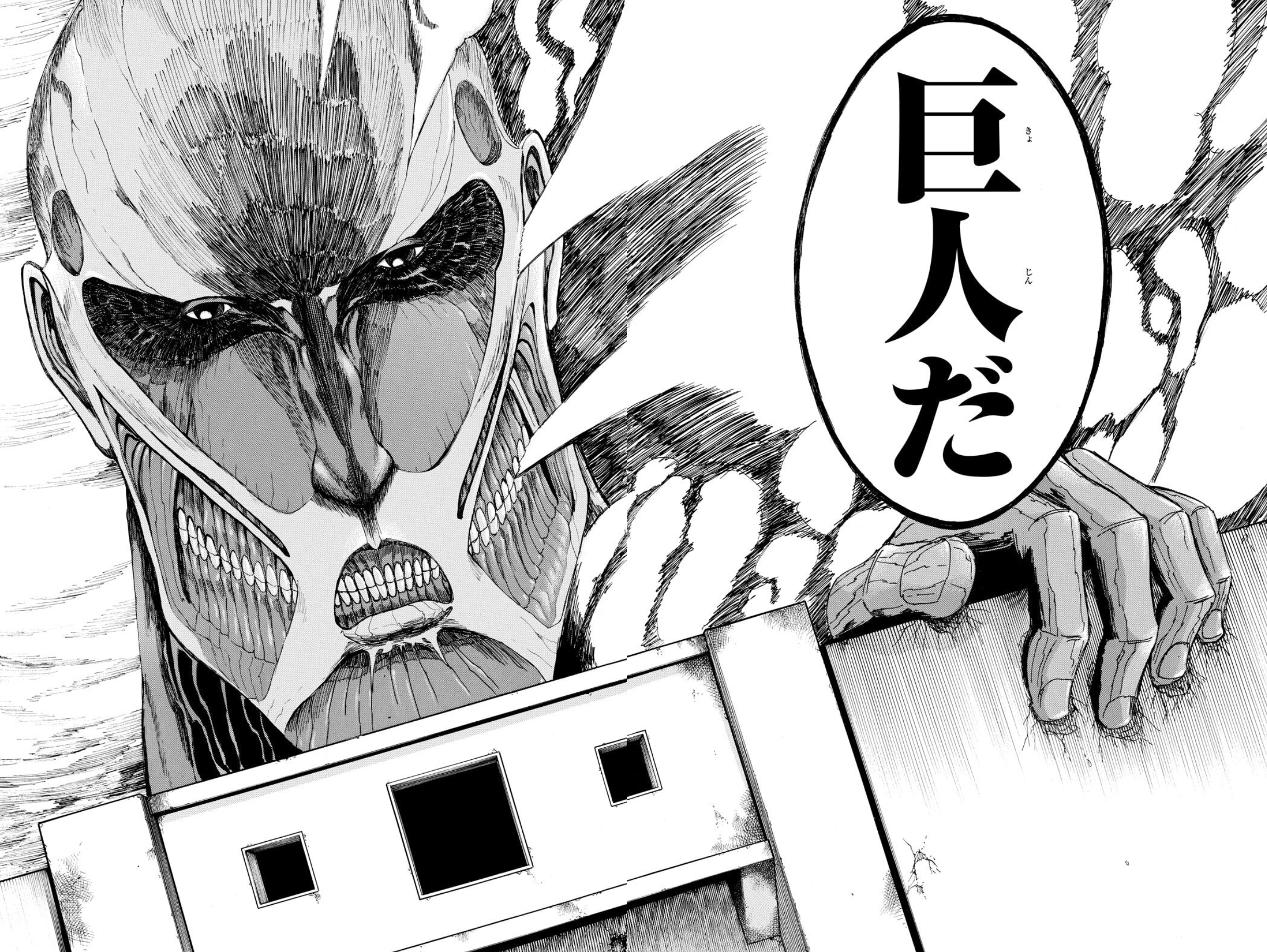
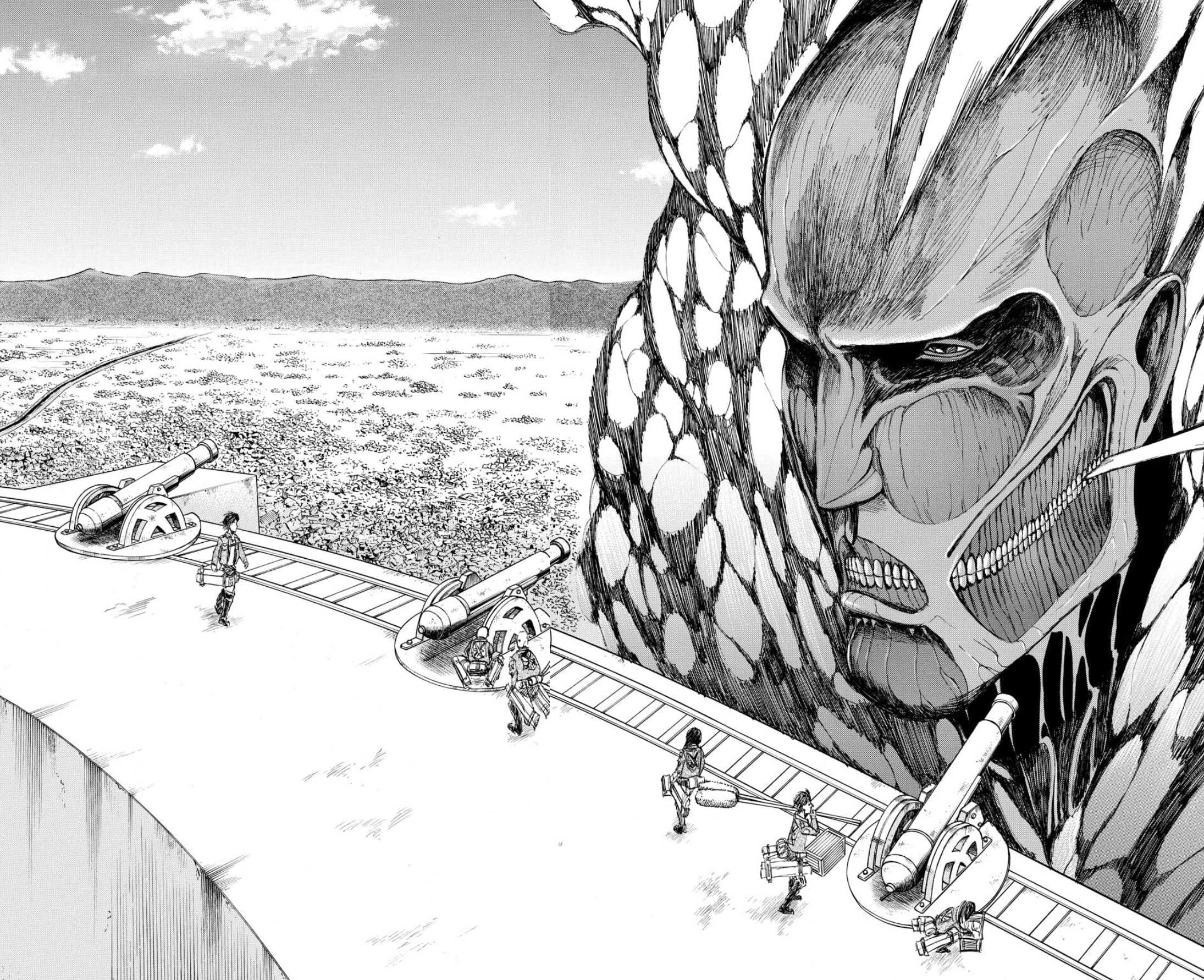
The titans are, roughly, “a body kept in human shape but scaled up enormously” — several meters, and the big ones in the tens of meters. So if you scale a human’s shape straight up, what happens to the bones?
Here’s where the square-cube law bites. In a similar shape — same form, only the size changed — if height goes up n times, surface area and bone cross-section go up n², while volume and weight go up n³. It’s the geometry principle running back to Galileo (Biewener, Journal of Experimental Biology 2005). Make it 10× taller and it’s about 1000× heavier.
The problem is that bone — the “pillar” holding the body up — can’t keep up with that increase. Double the height and body weight (volume) goes up 8×, but bone cross-section only 4×. As a result, the stress on the bone (force per unit area) roughly doubles (Biewener, Journal of Experimental Biology 2005). Scale up the same design and the bone becomes an ever more “snap-prone pillar.”
And the margin wasn’t big to begin with. Mammalian limb bones take stress of about 25–50% of their breaking strength just from walking and running, with a safety factor of only about 2–4 (Biewener, Journal of Experimental Biology 2005). Simple scaling eats that thin margin instantly. A body scaled to tens of meters in human shape would — never mind running — more naturally be expected to fail at the leg bones the moment it stood up.
Takeaway: “Big = sturdy” is false. The bigger you get, the more “delicate relative to your weight” the body becomes. This isn’t only a titan story — it connects to your knees when your weight goes up (see Q2).
 Dr. Water
Here’s the counterintuitive bit: the bigger a body gets, the more fragile it is relative to its own weight. “Big = tough” is exactly backwards. 🐬
▶ Related check-up: How strong can training make you? — if sheer size doesn’t make a body strong, this is where I check what actually does, and how far real muscle can be pushed.
Q2 | “But elephants stand” — yes, but not in human form.
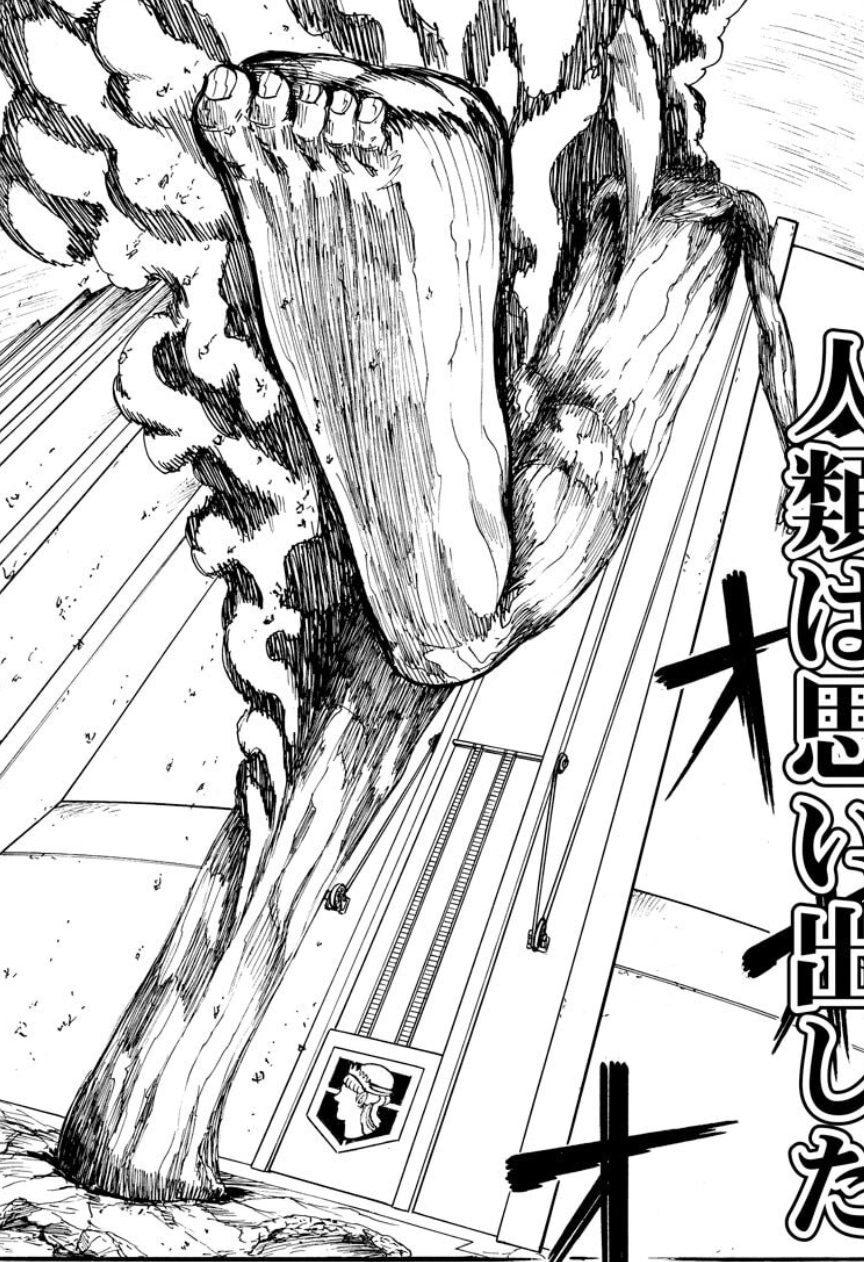
“But elephants stand,” you think. True — big mammals do stand and walk. But they didn’t get big without changing their shape.
Large animals keep bone stress roughly constant not just by thickening bone, but by taking a more upright, pillar-like limb posture that raises the leverage efficiency of the muscles (Biewener, Journal of Experimental Biology 2005). An elephant’s stocky legs running straight down aren’t a design quirk; they’re a mechanical necessity. Conversely, staying in human form — thin legs, pinched joints — while only getting bigger means stress only climbs.
And there’s a second cost of carrying a heavy body on land: it shows up in the joints. As weight rises, mechanical load on weight-bearing joints like the knee increases, contact stress on cartilage climbs, and the risk and progression of osteoarthritis rise. Being overweight is considered one of the most important preventable factors for knee osteoarthritis (Chen et al., Journal of Orthopaedic Translation 2020).
So even if a titan could stand, its knees would take an immense load every single step. If the titans in the series move oddly unstable and stiff — medically, that might be an honest depiction.
Takeaway: This one applies straight to real you. Add just a few kilograms and the burden on your knee cartilage climbs steadily. The plainest, surest way to protect your knees is not to gain too much weight. Less flashy than a finishing move — but this one really works.
Dr. WaterThis one isn’t about titans — it’s about you. Every extra kilo quietly raises the load on your knee cartilage. Protecting your knees is mostly about not gaining too much weight. 🐬
Q3 | Does a “body gets bigger” disease actually exist? — yes. And genuinely so.
I’ve been saying “scaling up is impossible,” but “a body becoming larger than usual,” the phenomenon itself, does exist in real medicine. And it’s a real state that people once feared or misunderstood as “giants.” This is not a place for jokes, so I’ll write it carefully.
A small organ at the base of the brain, the pituitary, can develop a tumor that overproduces growth hormone (GH). If that excess occurs in childhood, while the bones’ growth plates are still open, it can produce striking tall stature — gigantism. If it occurs in an adult after the plates have closed, the hands, feet, and facial features enlarge — acromegaly. This is the representative, real mechanism behind “a body getting bigger” (Asa & Ezzat, Journal of Clinical Medicine 2021).
Among people called “giants” in history, some genuinely lived with this GH excess (a pituitary tumor), as recent genetic analysis shows. DNA taken from the tooth of the 18th-century figure known as the “Irish Giant” was found to carry a mutation in a gene called AIP that predisposes to pituitary tumors (Chahal et al., New England Journal of Medicine 2011). Not monsters in a story — real people who lived with a hormonal disorder. Not, in any way, targets to mock for their appearance.
Takeaway: “Getting bigger” has a genuine medical mechanism. Fantasy scaling is impossible, but this condition is worth knowing as a doorway into the real system of endocrinology. And the next question is the most important part — what happens to a body that has grown large.
Q4 | ⚠️ Is a big heart a strong heart? Straight-faced here.
Moving a huge body needs a pump that sends that much blood everywhere — a big heart. So is “big heart = powerful”? Here’s the scariest part of medicine: the answer is no.
When the growth hormones GH and IGF-1 are chronically in excess, the heart muscle hypertrophies and fibroses (a stiffening change). Add high blood pressure, disordered glucose metabolism, and body-wide inflammation, and the result is that cardiovascular complications become a leading cause of death in acromegaly (Wolters et al., Reviews in Endocrine and Metabolic Disorders 2020).
What does the enlarged heart do? In the state called acromegalic cardiomyopathy, the heart wall thickens inward (concentric left-ventricular hypertrophy), and first the capacity to expand and hold blood falls (diastolic dysfunction). Left untreated, it eventually loses even the power to contract and push blood out, progressing to systolic heart failure (Sharma et al., Clinical Cardiology 2018). A thick, enlarged heart is not necessarily a strong heart. More often, it’s a heart losing its ability to keep circulation going.
Because this is a safety matter, I’ll be blunt. The idea that “bigger makes you stronger — muscles, organs, all better big” is, for the heart, clearly wrong. A thick heart wall isn’t necessarily a sign of trained strength; it can be the result of strain. If a checkup flags cardiac enlargement and it worries you, don’t leave it or push into hard exercise on your own judgment — consult your own physician.
And — there is real hope. If the biochemical control of the GH excess is achieved, mortality in acromegaly can return to the level of the general population (Wolters et al., Reviews in Endocrine and Metabolic Disorders 2020). The problems of a body grown large have room to be recovered through treatment. That’s worth emphasizing.
Takeaway: Size isn’t strength. For the heart, “having grown large” can itself be a sign of strain. And catching it early and acting can reduce that strain.
Dr. WaterI’ll say this one straight-faced: a big, thick heart isn’t a strong heart — it’s often a strained one. If a checkup flags an enlarged heart, don’t tough it out — see your doctor. 🙏
The verdict: fantasy vs. real
| Belief | Verdict |
|---|---|
| Scaled to tens of meters in human form, the bones can still hold the body | ✕ fantasy (square-cube law raises bone stress; crushed by its own weight on standing) |
| A big body is, by that alone, strong and sturdy | ✕ fantasy (big animals keep stress down via posture & bone shape; joints & heart lose out) |
| A “body gets bigger” condition exists in reality | ◎ true (pituitary GH excess = gigantism / acromegaly, a real mechanism) |
| An enlarged heart is a strong heart | ✕ fantasy (acromegalic cardiomyopathy = enlargement is strain, not strength; heart failure) |
Wrap-up
A titan scaled straight up probably can’t stand. The bones lose to their own weight, the knees grind, and the heart, the bigger it gets, grows not easier but harder. “Big = strong” is, in a living body, mostly the reverse.
But this doesn’t end as a monster story. As you get heavier, the burden on your knees climbs; a thickened heart can be a sign of strain, not strength — this is a story about all of us staring at our checkup numbers. And “a body getting bigger,” as a condition, has real medicine and real room to recover.
Manga is a doorway into how strange the human body is. And the real body is far more interesting than you’d guess.
See you at the next check-up.
📚 Following the series? This was 〈Body-Check #03〉. More anime, fact-checked by a doctor, is on the way. Get each new check-up in your inbox — subscribe free.
Dr. Water — physician in occupational and preventive medicine, and a die-hard anime/manga fan (a double insider).
Frequently Asked Questions
Could a giant human-shaped body actually stand up under its own weight?
No — a human scaled up to titan size would likely be crushed by its own bones. Under the square-cube law, weight increases much faster with size than bone’s cross-sectional strength does, so the stress on bone climbs sharply as a body scales up. Since walking bones already operate with only about a 2-4x safety margin, simple scaling would push a human-shaped giant’s leg bones to fail the moment it tried to stand.
If elephants can stand and walk despite being huge, why couldn’t a giant human do the same?
Because elephants aren’t just scaled-up humans — they changed shape to get big. Large animals keep bone stress manageable partly by adopting a more upright, pillar-like leg posture, not just thicker bones; staying in human proportions while getting bigger only makes bone stress worse. Extra weight also raises the load on joints like the knee, increasing cartilage stress and osteoarthritis risk — a factor relevant to real human bodies too, not just fictional giants.
Does having an enlarged heart or body from a growth-related condition mean you’re stronger and healthier?
No — a real condition (pituitary tumors causing excess growth hormone, called gigantism in children or acromegaly in adults) can enlarge the body and heart, but an enlarged heart here is a sign of strain, not strength; it can thicken, stiffen, and eventually lose pumping ability, and cardiovascular problems are a leading cause of death in acromegaly. If a checkup flags cardiac enlargement, don’t push into hard exercise on your own judgment — consult your physician, since treating the underlying hormone excess can bring risk back toward normal.
Disclaimer 1 | Medical
This article is general, educational medical commentary sparked by a work of entertainment. It is not medical advice and not intended to diagnose or treat. Reading it creates no doctor–patient relationship. For any health decision, consult your own physician. The author is a doctor, but these views are general and personal, and the author is not your doctor. If a checkup flags cardiac enlargement, high blood pressure, or something about your build, do not leave it or push into hard exercise on your own judgment — consult your own physician. Also, gigantism and acromegaly are real conditions; this article carries no intent to belittle anyone who lives, or has lived, with them.
Disclaimer 2 | Copyright & Non-Affiliation
This site is an independent, unofficial fan commentary/criticism work. It is not affiliated with, endorsed by, or sponsored by any anime/manga studio, publisher, author, or rights holder. All titles, characters, logos, and trademarks belong to their respective owners and are referenced here solely for identification, commentary, and criticism. Manga panels are used under the fair use doctrine (17 U.S.C. §107) for criticism and commentary only, in the minimum necessary amount, each with its source cited and each because the depicted scene is itself the subject of medical analysis. Rights holders with concerns: please contact us and we will respond promptly and, if appropriate, remove the material.
🩺 Your check-up is over — but the clinic is always open
📚 This clinic has a sequel. 14 legendary monsters — vampire, zombie, werewolf and more — properly diagnosed by a real doctor. The book this blog grew into, with new write-ups added. → Get it on Amazon — $3.99 / free on Kindle Unlimited
💌 Free newsletter — new diagnoses delivered to your inbox, no appointment needed. → Subscribe on Substack
▶️ Prefer video? Watch the diagnoses on YouTube. → The Anime MD


Comments