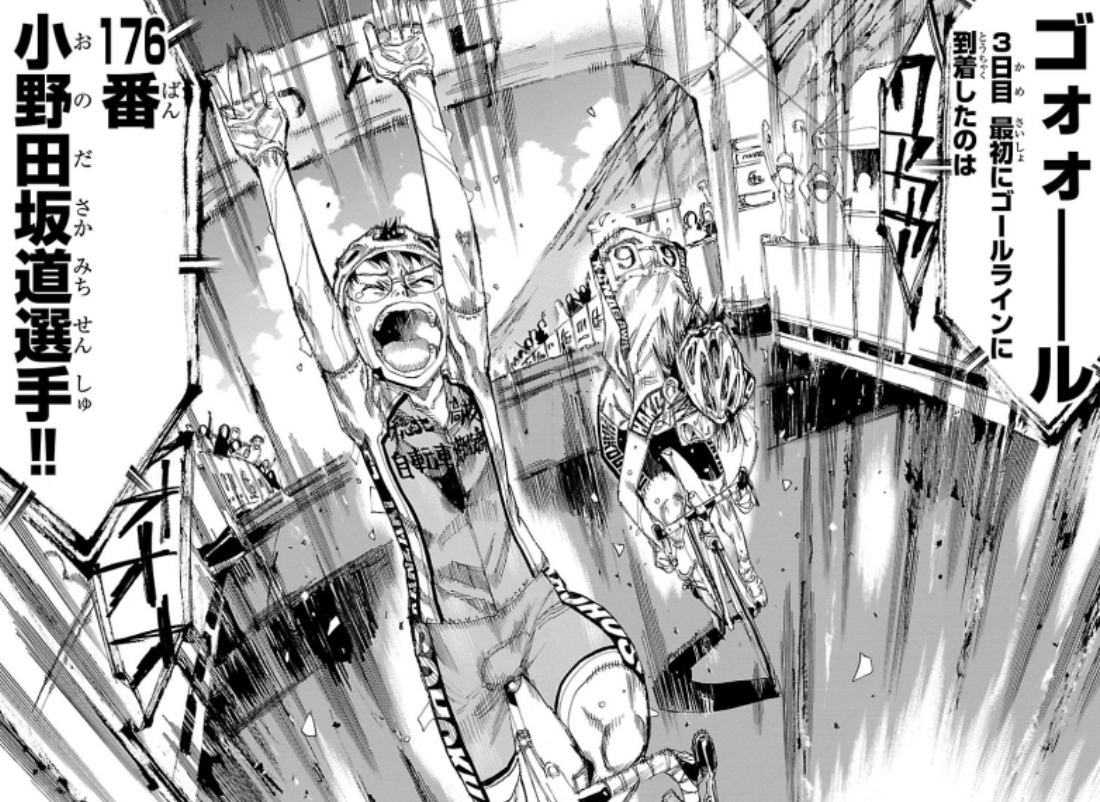
Hi, I’m Water 🐬 — an occupational physician. My day job is looking after the health of people at work.
Most cycling manga runs on the same engine: the hero trains brutally and gets strong. This one doesn’t.
He was already strong, and he had never trained for the sport at all.
He rode a heavy shopping bike — the kind with a basket on the front — to Akihabara to buy anime merchandise, because it saved him the train fare. That’s it. No club. No coaching. And yet he goes wheel-to-wheel with athletes who have done nothing but train.
Is that just the manga being generous to its protagonist?
No. In exercise-physiology terms, he was doing the single largest ingredient in how real endurance athletes train. He simply had no idea that’s what it was.
So today, instead of judging the story, let’s talk about your body and check the fiction against real medicine. The short version:
Onoda wasn’t fast because of raw talent, and no miracle happened. For years, he was doing — every single week — the exact training that endurance athletes spend most of their time on.
But there’s a catch, and I’m going to be honest about it: on the thing he’s most famous for — that impossible cadence — real professionals do the opposite.
📕 Want to read it? *Yowamushi Pedal* is available legally on official manga and streaming platforms.

The house rules
I’m not grading the manga. I’m asking, “if a human body went through this, what would actually happen?” Every medical claim links to a published study through its DOI — a permanent web address for a paper. And where researchers genuinely disagree, I’ll say they disagree rather than smoothing it into a tidy answer.
Q1 | He just rode to Akihabara. How does that make anyone fast?
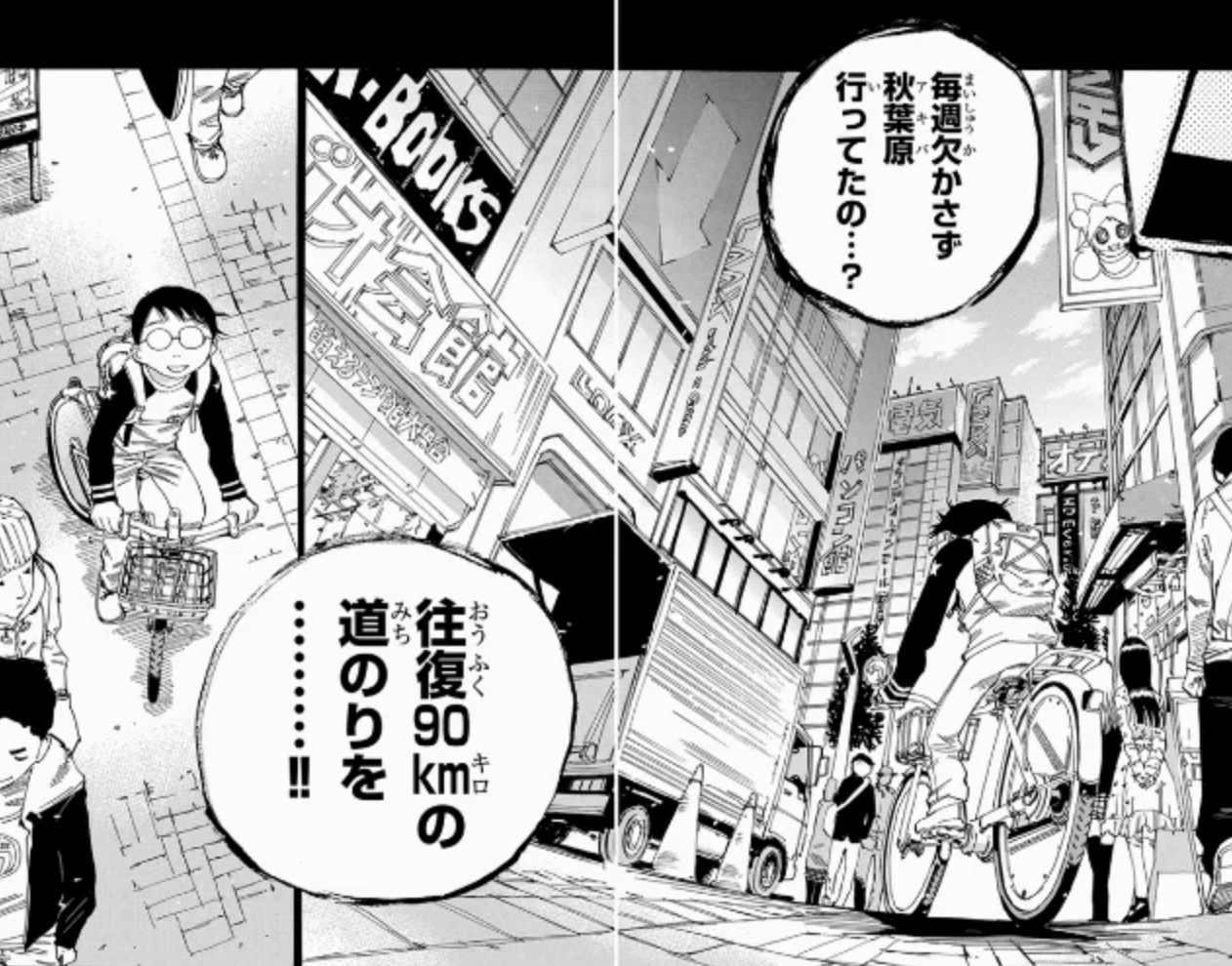
The manga states it outright: a 90 km round trip, every week. On a shopping bike with a basket.
To him it was never “training.” It was transport — and the motivation was anime merchandise and saving the train fare.
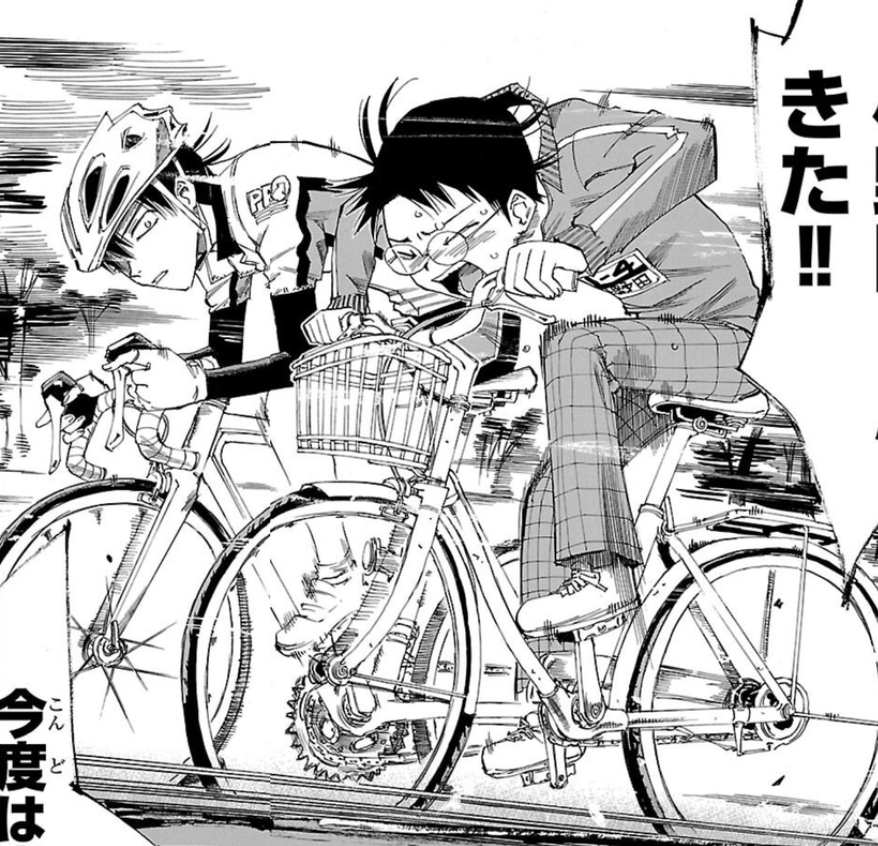
The manga makes the argument visually before it makes it in words: a shopping bike holding station alongside racing machines. That image is the thesis of this article in one frame — the same physiological stimulus, arriving without anyone calling it training.
Viewed through exercise physiology, this is exactly how an endurance base gets built.
What was quietly multiplying inside him
Sustained exercise increases the mitochondria in your muscles — the tiny factories inside cells that use oxygen to make energy. More factories mean more headroom at the same speed.
The question that matters here is *what* increases the number of factories. A review of the training literature puts it this way:
Training volume may be a critical factor affecting changes in mitochondrial content, whereas relative exercise intensity is an important determinant of changes in mitochondrial respiratory function.
(Granata et al. 2018, from the abstract)
So — **what grows the *number* of factories is total volume rather than how hard it hurts.** Note the authors’ own hedge (“may be”). Intensity isn’t useless; intensity governs a *different* variable — the *quality* of those factories.
That is precisely what Onoda was doing. He wasn’t riding fast. He was riding long, often, for years.
“Slow and long” is not a beginner’s workout
This may be the surprising part: it’s also what the best in the world do.
Pool the descriptive studies of nationally and internationally competitive endurance athletes — people training 10 to 13 times per week — and a consistent picture emerges: about 80% of training sessions are performed at low intensity (Seiler 2010).
The hard stuff is the other ~20%. The better the athlete, the more of their training is easy. (That 80% counts *sessions*, not hours.)
⚠️ Let me be precise here. The finding is “80% of sessions are low intensity,” not “low intensity is all you need.” They still do the other 20% hard.
What Onoda built on that shopping bike was a base — not a complete training program. Reading his improvement after he joins the racing club as “the missing 20% landed on top of an unusually large base” is the reading that fits the physiology.
So no: he hadn’t “never trained.” He had been doing, every week, the thing endurance athletes spend the most time doing. And on top of that —
it kept going. That’s the real point — and I’ll come back to why in Q5.
⚠️ A warning before you get ideas. If you just thought “so I’ll ride 90 km a week too,” please read Q4. For a growing body in particular, there are conditions attached.
Q2 | Is that ultra-fast pedaling actually an advantage?
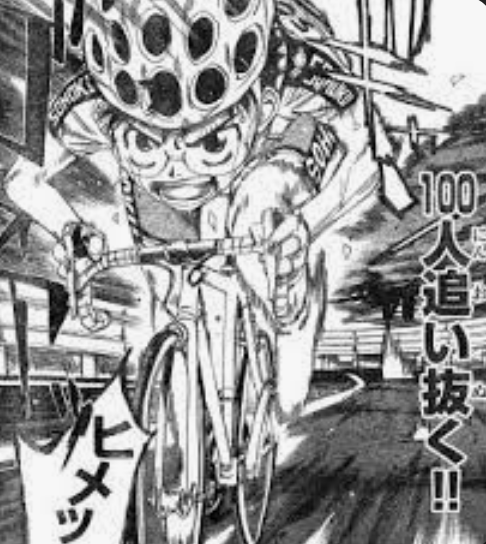
The manga sells the cadence with a number — a hundred riders passed — and that is precisely the claim the rest of this section puts to the test.
Onoda’s signature is his absurdly high cadence — how fast his legs spin. (Cadence is measured in rpm: pedal revolutions per minute, one full turn of the cranks.) This is the most interesting part of the article, and the part most people get wrong.
First, the paradox
Cycling science has been sitting on a strange finding for decades:
The cadence trained riders naturally choose is much faster than the cadence at which their bodies are most fuel-efficient.
When you measure them, trained cyclists and runners choose 90–100 rpm. Measure the cadence at which their oxygen cost is lowest, and it’s 53.3–59.9 rpm (Marsh & Martin 1997). (That range spans all groups and power outputs in the study, trained and untrained alike.)
Riders do not choose their most economical cadence. They pick the “wasteful” one instead.
So is Onoda’s way correct?
Here most explanations say: “high cadence spares your fast-twitch fibers — the ones that produce big force but fatigue quickly — so you tire less.” That claim goes further than the evidence.
What *is* solid is a measurement: at the same power output, the harder you spin, the smaller the peak force on each pedal stroke (Takaishi et al. 1998). Less load per stroke is real.
But the next step — “therefore fast-twitch fibers are spared” — is something the original authors themselves call speculation (“We speculated”). And a closely related hypothesis, that muscle activity is minimized at your preferred cadence, was tested and rejected (Marsh & Martin 1995).
In fact, *why* humans like to spin fast is unsettled. A leading alternative is that spinal central pattern generators — innate motor rhythms built into the nervous system — drive the choice, with no optimization involved at all (Hansen & Smith 2009). That same review notes that choosing a high cadence at low-to-moderate intensity is uneconomical and could compromise performance on long rides.
So Onoda’s high cadence isn’t “scientifically correct riding.” It’s a phenomenon nobody has fully explained yet.
That said — spinning fast is also a *skill*
Here’s the finding that supports Onoda directly.
The Takaishi study compared cyclists against athletes from other sports with equivalent fitness. At the same cadence and the same power, the cyclists used less oxygen (significant at 105 rpm for 150 W, and at 75, 90 and 105 rpm for 200 W).
You get better at spinning fast with practice. It’s a skill.
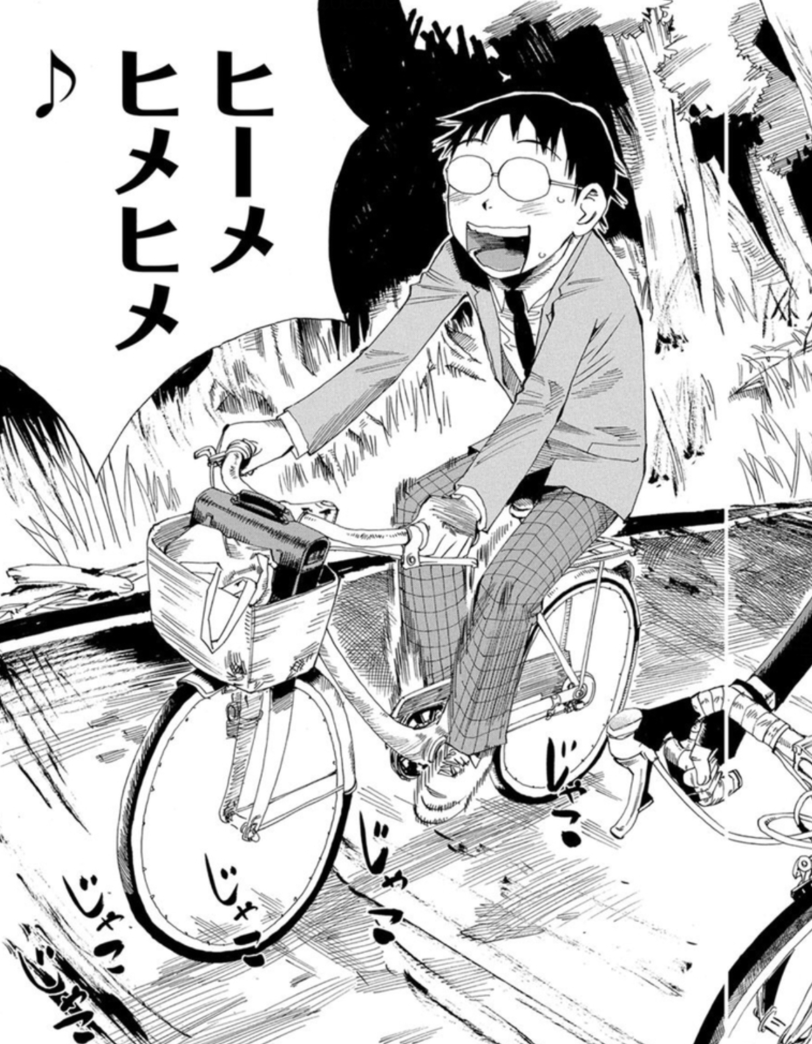
The artist even draws the cadence itself, rendering the pedal stroke as a rhythm on the page — which is exactly the variable Takaishi’s team measured.
Onoda had spent years spinning at a high cadence without knowing a thing about racing. He had no competitive training — but the one thing he had accumulated more than anyone was the skill of spinning fast. His signature move makes a great deal of sense in that light.
And then it flips
Here’s the twist: “slower is more efficient” doesn’t hold everywhere.
Put professionals at 366 watts — for scale: a fit amateur might hold around 200 W at a hard effort, so this is professional solo-racing power — and measure gross efficiency, and the result inverts:
| Cadence | Gross efficiency (share of energy that becomes useful work at the pedals) |
|---|---|
| 60 rpm | 22.4% |
| 80 rpm | 23.6% |
| 100 rpm | 24.2% |
(Lucia et al. 2004, 8 professionals)
⚠️ The statistically clear difference was only between 100 rpm and 60 rpm. 1.8 percentage points sounds trivial, but in this sport it changes how far the same effort carries you.
When you’re pushing hard, spinning fast is the more efficient option. The “slow is cheaper” finding from low-to-moderate intensity disappears at racing power.
🔑 But here’s the thing: Onoda and real professionals do the opposite
This is the part I most want to be honest about.
We have measurements of the cadences professionals actually used during the Giro, the Tour and the Vuelta — Europe’s three Grand Tours (Lucia et al. 2001, 7 professionals):
| Situation | Cadence |
|---|---|
| Flat group stages (~190 km) | 89.3 rpm |
| Individual time trial (~50 km) | 92.4 rpm |
| Long mountain climbs (~15 km) | 71.0 rpm |
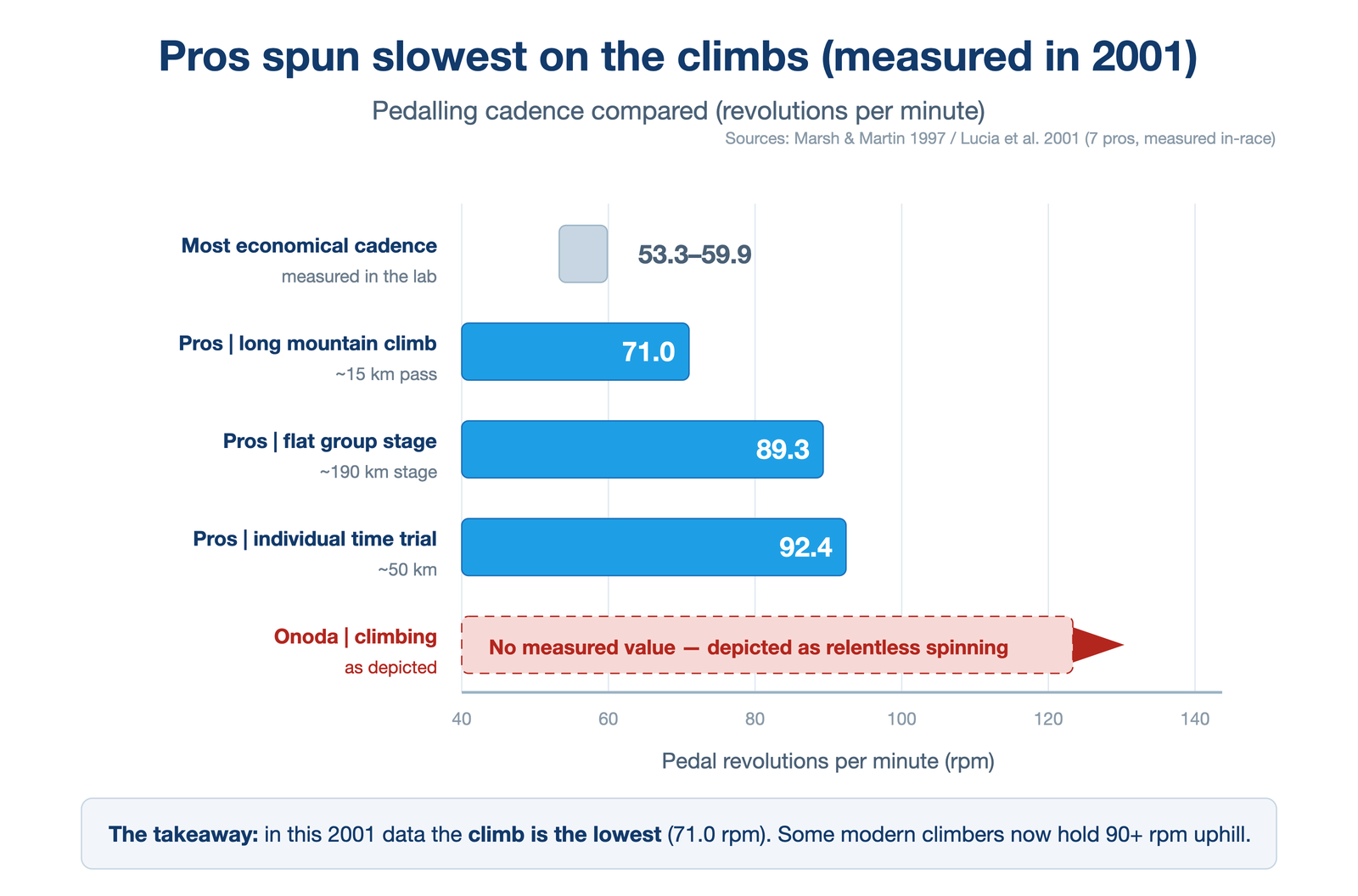
**The professionals measured here spun *slowest* on the climbs.**
Onoda’s showcase moment is climbing at an extreme cadence — the opposite side of that measurement.
⚠️ But this number has a date on it. These are 7 riders measured in 2001, a quarter of a century ago, and the sport has moved since.
It is still generally true that riders drop their cadence on climbs relative to the flat. But some of today’s leading climbers sustain well over 90 rpm uphill — and it gets talked about precisely because it is unusual.
⚠️ I’ll keep the evidence separate: the 71 rpm figure is peer-reviewed measurement, while the modern numbers come mainly from race power analyses in cycling media. Those are not the same grade of evidence, so I won’t state a modern figure as settled.
So the honest placement is this: Onoda’s climbing style was an outlier against the professionals of 2001, and it is the style of a small number of the very best riders today. The manga was, if anything, early.
That isn’t a flaw. It reads as an accurate portrayal of someone who was a spinner before he was ever a climber. Nobody taught him, so he took the cadence he used on the flats and kept using it up the hill.
And there’s a mechanical reason people miss. A Japanese shopping bike has low, limited gearing. To move at any real speed on one, you have no choice but to spin. Onoda didn’t become a high-cadence rider by temperament or talent — the bike he happened to own left him no other option.
Q3 | Is it talent? Could anyone do this?
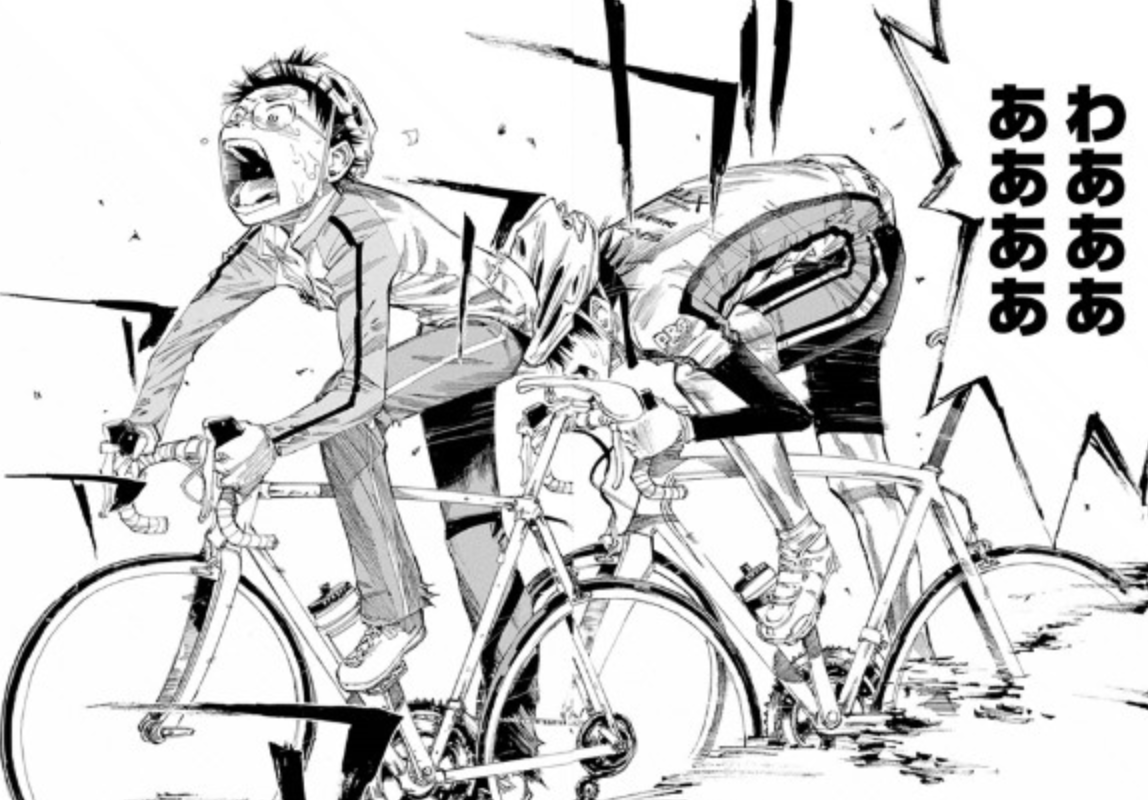
A shopping bike holding level with a trained racer is the manga posing the question this section answers: was that talent, or was it volume?
This is what most people actually want to know: do the same thing, and do you become Onoda?
The answer is “half true, half not.”
The yardstick: VO2max
VO2max sits at the center of endurance performance — the maximum amount of oxygen your body can use per minute. Your body burns oxygen to make energy, so a higher ceiling means you can go harder for longer.
Worth noting: riders who specialize in climbing really do score higher. Across 71 elite and professional cyclists, climbers averaged 78.2 and flat-terrain riders 72.6 (in mL/kg/min — oxygen used per minute per kilogram of body weight, a metric that inherently flatters climbers, since being light helps) (Sallet et al. 2006; 24 climbers, 32 flat-terrain riders).
The interesting part: in the same study, the climbers’ maximal aerobic power — the wattage they reached in a test that ramps up until you can’t continue — was actually lower (438.5 vs 465.3 W).
⚠️ Note the units carefully, because they cut in opposite directions. VO2max there is per kilogram, which favors light riders; the wattage is absolute, which favors heavy ones. Climbers are lighter, so some of that wattage gap is simply body size. The safe reading is not “climbers are weaker” but “climbers are built to carry less mass up a hill, not to produce the biggest raw numbers.“
They can’t produce the biggest raw power, but they use oxygen extremely well relative to their weight. That is what a climber looks like. Onoda’s build and riding style fit the picture neatly.
The same training does not produce the same gains
The landmark study here is HERITAGE (Bouchard et al. 1999).
481 sedentary white adults (98 families, two generations) did exactly the same 20-week training program, and their VO2max change was measured.
The results:
- On average, the oxygen they could use rose by about 400 mL per minute
- But the spread was enormous: some gained little or nothing, while others gained more than 1.0 L per minute
- And the **heritability of the *gain itself* — the share of person-to-person variation explained by genetics — was estimated at up to 47%**
That last line is the important one. Genetics influenced not just where you start, but how much you improve.
⚠️ A common misreading: this does not mean “47% of VO2max is genetic.” The 47% applies to how much you gain from training, and the original says “maximal” — an upper bound, not a point estimate.
…except there’s a study pointing the other way
If we stopped there, the answer would be “talent wins.” But this field contains a directly opposing result.
78 healthy young men were split into five groups training 1, 2, 3, 4 or 5 sessions per week (60 minutes each), otherwise identical, for six weeks. The share of “non-responders” broke down like this (Montero & Lundby 2017).
⚠️ One caveat before you read the table: improvement here was judged on maximal power output in watts, not VO2max. HERITAGE used VO2max; this study used watts — different yardsticks. Keep that in mind while reading them against each other.
| Sessions per week | Share who didn’t improve |
|---|---|
| 1 | 69% |
| 2 | 40% |
| 3 | 29% |
| 4 | 0% |
| 5 | 0% |
The researchers then took only the people who hadn’t improved and gave them another six weeks with two extra sessions per week. The result: every one of them improved. The paper’s conclusion is blunt:
Individual non-response to exercise training is abolished by increasing the dose of exercise.
In other words, many of the people who looked like “non-responders” may simply not have been doing enough.
These two are not reconciled
This matters, so I’ll say it plainly: the argument is not settled.
- HERITAGE held the dose constant and measured individual differences → the differences were real
- Montero & Lundby changed the dose itself → the differences vanished
Both designs are legitimate. They’re looking from different angles.
So, back to Onoda
Which group was he in?
To be fair to the data: by session count, Onoda is a once-a-week rider. The manga says every week, so on that table he sits in the 69% — the hardest-to-improve group.
Except that this study’s unit was 60 minutes per session. A 90 km round trip on a heavy shopping bike is a comfortable four to five hours of riding. Converted to time, that’s 240–300 minutes a week — the same total-volume band as the four- and five-session groups.
⚠️ That conversion is mine. What the study varied was *frequency*; it did not demonstrate that one long session produces the same result.
With that said:
- He may have been a strong responder (the HERITAGE view)
- Or he was simply accumulating enough total volume to improve (the Montero & Lundby view)
Both can be true at once. It isn’t talent versus effort. He happened to land on the side of the line where you improve regardless of talent — that’s the reading I find most honest.
And that matters for you, too. Before concluding “I’m just someone who doesn’t respond to exercise,” there’s room to ask whether the dose was ever high enough.
⚠️ That said, this study used healthy adults over 6 + 6 weeks. It doesn’t guarantee that everyone improves. And the cautions that come with raising your volume are in Q4 — please don’t skip it.
Q4 | ⚠️ So should I go ride 90 km a week? — Wait.
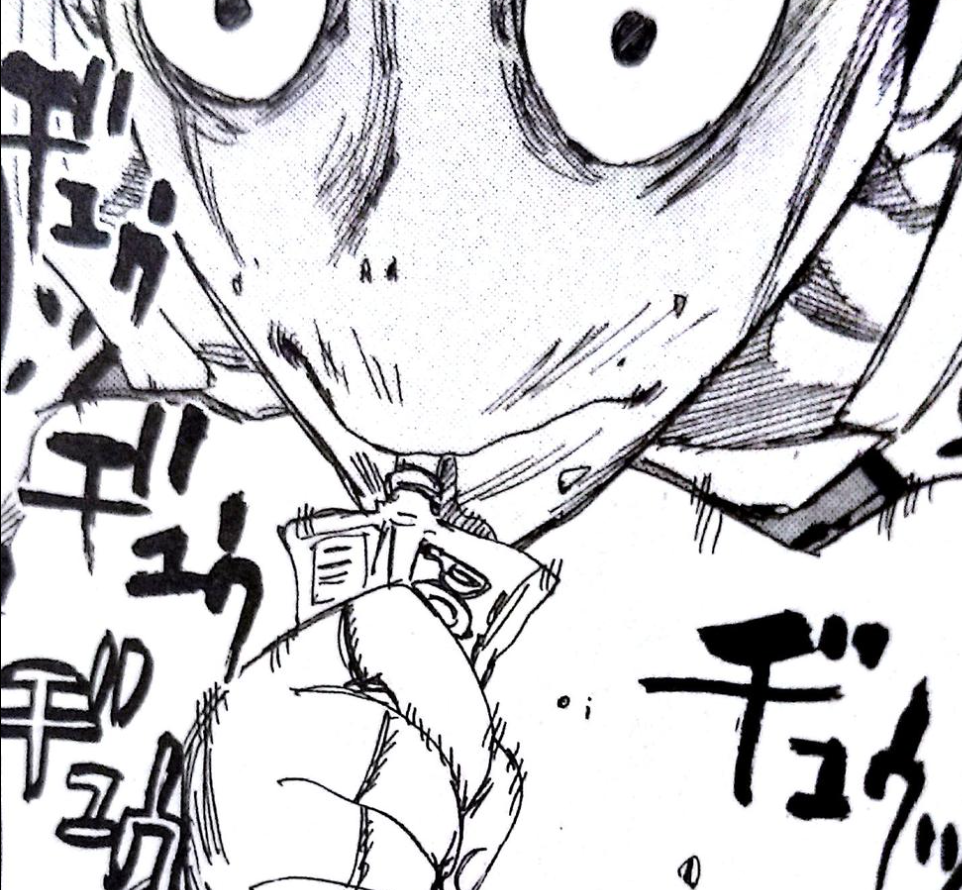
The manga can draw the strain. What it cannot draw is the thing this section is about: what the body is quietly spending while that effort is being produced. That invisible ledger is where the real risk lives.
If you’ve read this far thinking “volume is king,” here is the most important caveat in the article.
There’s a premise the manga never draws: he was eating.
What matters isn’t your mileage — it’s your mileage *relative to what you eat*
Sports medicine has a concept called REDs (Relative Energy Deficiency in Sport). The International Olympic Committee’s 2023 consensus statement describes it as:
a syndrome of deleterious health and performance outcomes experienced by female and male athletes exposed to low energy availability — inadequate energy intake in relation to exercise energy expenditure
(Mountjoy et al. 2023, from the abstract)
The key phrase is not “not eating” but “not enough relative to what you spend.” You can be eating plenty and still be in deficit, if you’re riding enough.
And note this carefully: it is not a women’s issue. The statement says female and male athletes, explicitly.
So: the most dangerous thing about increasing your training is leaving your food where it was.
People say “resting is part of training.” I’d add: so is eating.

⚠️ A growing body is not a scaled-down adult
And this isn’t hypothetical for this story: Onoda himself is a high-schooler, right in the middle of that growth window.
The 2014 IOC statement that first defined RED-S contains a phrase that often gets skipped. Whether energy is sufficient is judged against:
energy expenditure required for health and activities of daily living, growth and sporting activities
(Mountjoy et al. 2014, from the abstract)
A growing body needs fuel for moving, for living — and for growing. Eat like an adult and you’re already short.
Then there’s a study that genuinely unsettled me. Thirteen male high-school endurance athletes followed for three years (Stenqvist et al. 2023; cross-country skiers and biathletes, mean age 16.3).
- At baseline, 5 of the 13 (38%) already had low bone density in the lumbar spine (lower back)
- Over three years, most failed to gain the bone mass puberty should have added
- Meanwhile, their performance improved
“Getting faster” does not mean “getting enough.” The body will run on whatever it can borrow from elsewhere.
⚠️ It’s a small study of 13 people, and it does not say endurance sport weakens bones.
Also, no other REDs indicator was detected in this cohort. The accurate reading is: even when nothing looks deficient, bone growth can still be quietly going missing — which is the frightening part.
The overuse trap — endurance is especially exposed
The American Academy of Pediatrics’ 2024 clinical report contains a passage that describes this protagonist exactly:
Endurance athletes appear to be at increased risk of overtraining syndrome, as repeated prolonged bouts of exercise may outpace the intervening recovery and performance decreases may be misidentified as poor fitness, resulting in increased training and compounding the imbalance.
Your performance drops → you assume you’re undertrained → you ride more → it drops further. That loop is the specific hazard of endurance sport.
The same report also states:
Growing bones in children are less tolerant of stress than those of adults and may be more susceptible to the development of stress injuries. In addition, apophyses and epiphyses in children may be particularly vulnerable before skeletal maturity.
(Apophyses and epiphyses are the growth areas at the ends of a child’s bones — where tendons attach, and where the bone lengthens.)
⚠️ An honest caveat. Most of this overuse research comes from running and jumping — sports with landing impact. Cycling has no landing impact, so I won’t import runners’ stress-fracture numbers here.
But “no impact” does not mean “safe for bone.” If anything, the reverse. Bone strengthens in response to impact, so cycling is a poor sport for building it.
And note: those 13 athletes above were cross-country skiers and biathletes — also low-impact endurance. Even in low-impact sport, adolescent bone was quietly failing to accrue. I think that point does carry over to cycling.
Red flags I’d want you to see a doctor about
The AAP lists the signs of overtraining as an otherwise unexplained decrease in performance, plus fatigue, sleep disturbances, mood changes, and increased risks of illness and injury. On treatment:
If other conditions have been excluded and overtraining is suspected, the only treatment is a reduction in training and facilitation of recovery through optimized nutrition, increased sleep, and stress reduction.
The only treatment is doing less. Doing more never fixes it.
⚠️ That slump may not be overtraining at all
Notice the clause in that quote: “if other conditions have been excluded.” Skipping it is dangerous.
The signs below are nearly indistinguishable from treatable illnesses — especially in a growing endurance athlete:
- Iron deficiency (anemia, and the stage before it) — common in adolescents, endurance athletes, and anyone who menstruates. It presents as “training hard and getting slower” and “can’t shake the fatigue,” i.e. exactly like overtraining. A blood test finds it, and it’s treatable.
- Thyroid disease, infections such as mononucleosis, depression, eating disorders
So “just rest and it’ll pass” is a conclusion you’re entitled to only after a clinician has ruled these out. Self-diagnosing and resting for months is the most expensive mistake you can make.
With that said, if any of the following persist, please see a clinician rather than waiting it out:
- You’re training, and getting slower (the most commonly missed sign)
- Unintended weight loss
- In a growing child: height gain has slowed, or they’re drifting off their growth curve (for parents: this is the most reliable sign you can track at home)
- Fatigue that doesn’t clear, or persistent trouble sleeping
- Persistent low mood or irritability; more frequent illness or injury
- Periods have stopped or become irregular (if you menstruate)
- Pain in one specific spot, progressing from “only after riding” → “during riding” → “even at rest” (across all sports, this is the classic sequence of an overuse injury advancing)
- Chest pain, severe breathlessness, or fainting during exercise → stop immediately and seek care
Practical numbers for adding volume
The AAP presents these as what is “commonly recommended“:
- Advance training load (running mileage, for example) by no more than 10–20% per week
- Take at least 1 to 2 days off per week from all organized sport
- Take 2 to 3 months off from a given sport each year (which may be divided into 1-month increments)
⚠️ In the same passage the AAP cautions that the tolerable load varies with experience, age, physical maturity and prior injury. These are general guideposts for children in organized sport, not a prescription for an individual. If you have a medical condition, or you’re still growing, talk to your own clinician before increasing.
And now, the injury that actually happens most
I’ve spent this section on energy and bone, so let me rank things honestly. For a teenager riding long distances, the highest-probability and highest-severity risk is a collision or a crash. It is orders of magnitude more likely than overtraining syndrome.
- Wear a helmet. (In Japan, where this story is set, helmet use is a legal duty of effort for riders of every age.)
- Front and rear lights, plus reflective gear — essential if you’re getting home near dusk
- Tell someone your route; carry a phone and some cash
- Don’t pick a route that puts you on heavy-traffic arterial roads for hours
And heat. Four to five hours of activity is a heat-illness risk in its own right. Drink regularly rather than waiting until you’re desperate, get some salt in, avoid the hottest part of the day, and if you feel unwell, take public transport home without hesitation. Finishing is not the point.
This links back to the previous section: Someone whose bones have quietly weakened from under-eating doesn’t break them while riding. They break them when they hit the ground.
Before I scare you off — the other side
I’ve written a lot of cautions, so here is the counterweight, honestly reported.
A review of youth distance running and lower-extremity injury concluded (Paz et al. 2021):
Available literature suggests youth can participate in distance running with minimal adverse effects.
The same review immediately adds: “One exception may be increased vulnerability to growth plate injury.” That can’t be dropped.
And while it found no correlation between mileage and injury, 7 of the 9 included studies were case reports or case series — a design that could not detect such a correlation in the first place. The review’s headline conclusion is that research is badly lacking. Read it as “not yet studied,” not “proven safe.”
So: riding long isn’t the danger. The danger is food and rest failing to keep up with what you spend.
Part of why Onoda never broke down over those years is that it never felt like hard training to him. The same distance ridden with gritted teeth is an entirely different proposition.
If you’re going to copy anything, copy the part where he never had to force himself — not the distance.
And that isn’t just my opinion. The AAP lists, first among its conditions for children entering endurance events, that the child is intrinsically motivated. Onoda was exactly that.
Q5 | So what was actually remarkable about him?
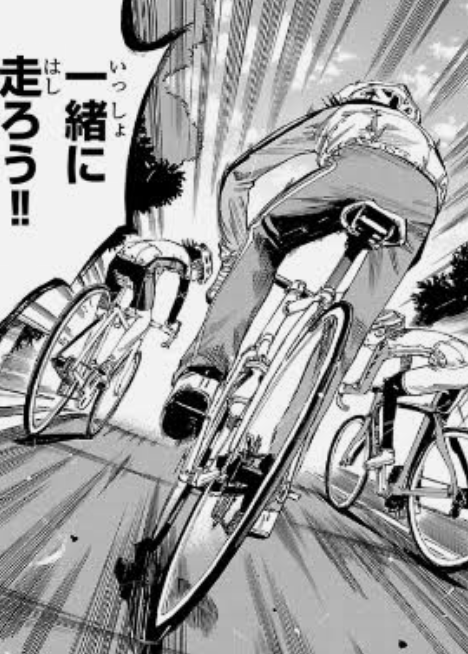
And note what the story adds on top of the destination: company. A route you ride with someone is one more mechanism that removes the need for willpower.
Having gone through all of it, the thing I find most impressive isn’t talent, and it isn’t grit.
It’s that it kept going for years.
Onoda wasn’t gritting his teeth. He was humming the theme song of a show he loved, heading toward a place he loved. Because the destination was somewhere he wanted to be, he never had to spend willpower.
Whether an exercise habit survives has far less to do with willpower than with the system you happen to be inside. Onoda happened to be inside one that kept working.
And here’s where the occupational physician comes in
This connects straight to my day job.
Telling employees to “exercise for your health” almost never works. The reason is simple: the design requires willpower. And willpower is gone on the days people are tired.
What survives is the arrangement where not doing it would be the strange choice:
- The commute or the errand *is* the exercise
- The destination is somewhere the person actually wants to go
- It starts without anyone having to decide to start
That’s what Onoda had. Medicine has a term for part of it — active commuting — but in his case it was simpler than that: the thing he loved was far away.
Programs that demand willpower don’t last. What wins is changing the path, not the person.
I think about this constantly in workplace health. A poster telling people to take the stairs works less well than moving the elevator a little further away.
Verdict: Fantasy vs. Real
| Claim | Verdict |
|---|---|
| Riding a shopping bike to Akihabara builds an endurance base | TRUE (what grows mitochondrial content is total volume, not intensity; elites do ~80% of sessions easy) |
| But riding slow and long alone will make you elite | FANTASY (elites still do the other 20% hard; what he built was a base, not a finished program) |
| Climbing specialists have higher VO2max | TRUE (78.2 vs 72.6 mL/kg/min — and climbers’ maximal aerobic power is actually lower) |
| Riders don’t choose their most fuel-efficient cadence | TRUE (preferred 90–100 rpm; most economical 53.3–59.9 rpm) |
| Spinning fast up climbs is how fast riders ride | IT DEPENDS (real professionals climb at ~71 rpm — the opposite. Though at racing power, high cadence does become more efficient) |
| High cadence spares fast-twitch fibers, so you tire less | UNSETTLED (the original authors call it speculation; a related hypothesis was rejected) |
| Do the same training, gain the same amount | FANTASY (at a fixed dose, gains vary enormously; heritability of the gain is up to 47%) |
| “I’m a non-responder” is fixed | UNSETTLED (in young men, raising total volume took non-response to 0% — though judged on watts, not VO2max) |
| Food doesn’t matter if you’re getting faster | FANTASY (if intake doesn’t match expenditure, health and performance both suffer — in men and women alike) |
Wrapping up
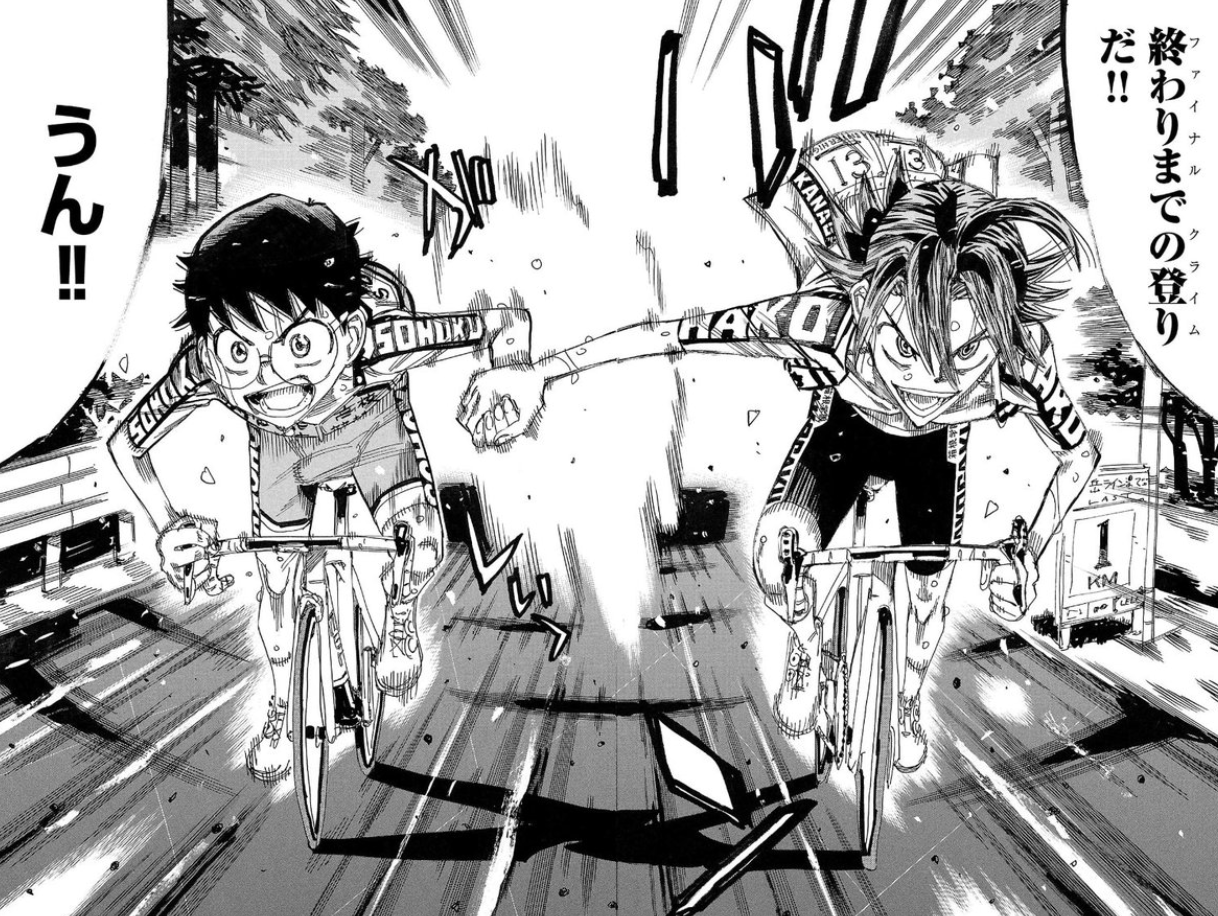
What makes this series work isn’t the thrill of an amateur winning. It’s that it planted a premise that holds up physiologically: the protagonist who “never trained” had in fact been doing the most effective training every week.
And the lesson we can take from it is probably this:
Your body doesn’t only count what you decided to call training.
The commute. The stairs. The long way round. Your body has been quietly adding up everything you never thought of as exercise. Onoda’s ride to Akihabara was an extreme case of it.
One more thing. People improve at different rates. You can put in the same miles as the person next to you and not get as fast. That isn’t laziness or weak character — it’s a finding that has been confirmed again and again. Your rate of improvement is yours.
Manga is a doorway into how strange the human body is — and the real biology is stranger than the fiction.
See you in the next check-up.
Frequently Asked Questions
Did riding a shopping bike to Akihabara really make Onoda fast?
In exercise-physiology terms, yes — that weekly ride was doing the single largest ingredient of real endurance training. The manga states it outright: a 90 km round trip every week on a heavy shopping bike. Because it was steady, low-intensity riding, it quietly built what the article calls an aerobic base — more mitochondria in the muscles and a bigger engine — which is exactly what endurance athletes spend most of their time on (about 80% of sessions at low intensity, per Seiler 2010). The article is careful to add that this base is not a complete training program; athletes still do the other ~20% hard.
Is Onoda’s super-high pedaling cadence realistic?
This is the one place the article says the manga gets it backwards. On climbs, real professionals tend to pedal at a relatively low cadence — around 71 rpm in peer-reviewed measurement — the opposite of Onoda’s famous ultra-high spinning. The article keeps that 71 rpm figure separate as measured evidence, and notes that at racing power high cadence can become more efficient, but the claim that a very high cadence by itself makes you climb faster goes further than the evidence.
If I just ride a lot at low intensity, will I become Onoda?
The article’s answer is “half true, half not.” Lots of steady, low-intensity volume genuinely builds an aerobic base and can raise VO2max — the maximum oxygen your body can use per minute, which sits at the centre of endurance performance. But a base is not the whole picture: endurance athletes still do roughly 20% of their training hard, and Onoda’s jump after joining the racing club is best read as that missing hard portion landing on top of the base he already had. This is general education, not a training prescription.
Disclaimer 1 | Medical
This article is entertainment commentary, not medical advice, diagnosis, or treatment. I am not your physician. If you are starting exercise or substantially increasing it — particularly if you have a medical condition, are still growing, or have any health concerns — please speak with a clinician first. Chest pain, severe breathlessness, or fainting during exercise are reasons to stop immediately and seek care. This article does not endorse any specific training program.
Disclaimer 2 | Copyright & Non-Affiliation
This site is an independent, unofficial fan commentary/criticism work. It is not affiliated with, endorsed by, or sponsored by any anime/manga studio, publisher, author, or rights holder. All titles, characters, logos, and trademarks belong to their respective owners and are referenced here solely for identification, commentary, and criticism. This article reproduces a limited number of manga panels from *Yowamushi Pedal* (Wataru Watanabe, Akita Shoten) as quotation for the purpose of criticism and commentary under fair use, using no more of the work than the commentary requires. Each panel is reproduced unaltered — including all original Japanese text within speech bubbles, with English translations provided only in the captions outside the image — is attributed to its source, and is used only to support the surrounding analysis, which is the substance of this piece. No pirated scans are used. Where English dialogue appears in a caption, it is my own translation, provided outside the image for the reader’s comprehension; the panels themselves retain their original Japanese text. The volume 1 cover is reproduced solely to identify the work being discussed. Rights holders with concerns: please contact us and we will respond promptly.
Sources (DOI)
- Marsh AP, Martin PE. Effect of cycling experience, aerobic power, and power output on preferred and most economical cycling cadences. *Med Sci Sports Exerc*. 1997;29(9):1225–1232. https://doi.org/10.1097/00005768-199709000-00016
- Lucia A, Hoyos J, Chicharro JL. Preferred pedaling cadence in professional cycling. *Med Sci Sports Exerc*. 2001;33(8):1361–1366. https://doi.org/10.1097/00005768-200108000-00018
- Lucia A, et al. In professional road cyclists, low pedaling cadences are less efficient. *Med Sci Sports Exerc*. 2004;36(6):1048–1054. https://doi.org/10.1249/01.mss.0000128249.10305.8a
- Takaishi T, et al. Neuromuscular, metabolic, and kinetic adaptations for skilled pedaling performance in cyclists. *Med Sci Sports Exerc*. 1998;30(3):442–449. https://doi.org/10.1097/00005768-199803000-00016
- Marsh AP, Martin PE. The relationship between cadence and lower extremity EMG in cyclists and noncyclists. *Med Sci Sports Exerc*. 1995;27(2):217–225. PMID 7723645
- Hansen EA, Smith G. Factors affecting cadence choice during submaximal cycling and cadence influence on performance. *Int J Sports Physiol Perform*. 2009;4(1):3–17. https://doi.org/10.1123/ijspp.4.1.3
- Bouchard C, et al. Familial aggregation of VO2max response to exercise training: results from the HERITAGE Family Study. *J Appl Physiol*. 1999;87(3):1003–1008. https://doi.org/10.1152/jappl.1999.87.3.1003
- Montero D, Lundby C. Refuting the myth of non-response to exercise training: ‘non-responders’ do respond to higher dose of training. *J Physiol*. 2017;595(11):3377–3387. https://doi.org/10.1113/JP273480
- Granata C, Jamnick NA, Bishop DJ. Training-induced changes in mitochondrial content and respiratory function in human skeletal muscle. *Sports Med*. 2018;48(8):1809–1828. https://doi.org/10.1007/s40279-018-0936-y
- Seiler S. What is best practice for training intensity and duration distribution in endurance athletes? *Int J Sports Physiol Perform*. 2010;5(3):276–291. https://doi.org/10.1123/ijspp.5.3.276
- Sallet P, et al. Physiological differences of elite and professional road cyclists related to competition level and rider specialization. *J Sports Med Phys Fitness*. 2006;46(3):361–365. https://pubmed.ncbi.nlm.nih.gov/16998438/
- Mountjoy M, et al. 2023 International Olympic Committee’s (IOC) consensus statement on Relative Energy Deficiency in Sport (REDs). *Br J Sports Med*. 2023;57(17):1073–1097. https://doi.org/10.1136/bjsports-2023-106994
- Mountjoy M, et al. The IOC consensus statement: beyond the Female Athlete Triad—Relative Energy Deficiency in Sport (RED-S). *Br J Sports Med*. 2014;48(7):491–497. https://doi.org/10.1136/bjsports-2014-093502
- Stenqvist TB, Melin AK, Torstveit MK. Relative Energy Deficiency in Sport (REDs) indicators in male adolescent endurance athletes: a 3-year longitudinal study. *Nutrients*. 2023;15(24):5086. https://doi.org/10.3390/nu15245086
- Brenner JS, Watson A; AAP Council on Sports Medicine and Fitness. Overuse injuries, overtraining, and burnout in young athletes. *Pediatrics*. 2024;153(2):e2023065129. https://doi.org/10.1542/peds.2023-065129
- Paz T, et al. Youth distance running and lower extremity injury: a systematic review. *Int J Environ Res Public Health*. 2021;18(14):7542. https://doi.org/10.3390/ijerph18147542
🩺 Your check-up is over — but the clinic is always open
📚 This clinic has a sequel. 14 legendary monsters — vampire, zombie, werewolf and more — properly diagnosed by a real doctor. The book this blog grew into, with new write-ups added. → Get it on Amazon — $3.99 / free on Kindle Unlimited
💌 Free newsletter — new diagnoses delivered to your inbox, no appointment needed. → Subscribe on Substack
▶️ Prefer video? Watch the diagnoses on YouTube. → The Anime MD









Comments